
Dr. Alex Choi1, Dr. Geoffrey Mckee1, Dr. Olu Oyeniran1, Dr. Ceinwen Pope1, Dr. Yvonne Tan1
1University of British Columbia
The popularity of caffeinated energy drinks continues to grow, with the percentage of youth aged 12 to 18 in British Columbia reporting having consumed energy drinks more than doubling in the 5 years between 2018 and 20231. Twenty-eight per cent of B.C. high schoolers participating in the Youth Development Instrument in 2025 reported at least daily energy drink consumption2. Given the increasing prevalence of energy-drink use among youth, pharmacists may encounter individuals who consume these beverages while taking prescription stimulant medications.
Energy drinks are beverages that contain high levels of caffeine, which acts as a central nervous system stimulant through inhibition of the adenosine receptors3. Health Canada recommends a precautionary caffeine limit of 2.5mg/kg/day for children and adolescents up to age 184. While all caffeine sources (e.g., coffee) should be considered, caffeinated energy drinks are of particular concern given that a single energy drink can easily exceed caffeine limits, their marketing appeals to youth, and awareness of their risks is low5,6. Energy drinks can also be high in sugar and contain additives like taurine, herbal extracts, B vitamins, and minerals, which can interact synergistically with caffeine to heighten its effects7.
Prescription stimulants such as amphetamine and methylphenidate, often prescribed for conditions such as attention-deficit hyperactivity disorder (ADHD), increase central nervous system activity by enhancing dopamine and norepinephrine levels3. When stimulant medications and caffeinated energy drinks are consumed together, their stimulant effects may be synergistic or additive.
Why is this a concern?
The increase in youth consumption of caffeinated energy drinks is concerning due to the association with adverse health effects such as sleep disruption, anxiety, and high blood pressure8. Energy drinks may also cause both pharmacokinetic and pharmacodynamic drug interactions, including with antidepressant, neuroleptic, antiplatelet, hypoglycemic, and non-steroidal anti-inflammatory drugs7. Energy drink use has also been linked to increased substance use and risk-taking behaviour, although these relationships are not yet fully understood9.
Many individuals may not realize the risks associated with consuming stimulant medications and caffeinated energy drinks together. Serious adverse effects are rare. However, these risks recently received greater attention after a Quebec teenager died suddenly after drinking a can of Red Bull while on methylphenidate for ADHD10.
What pharmacists can do
When dispensing stimulant medications to children and youth under age 18 and/or their caregivers, pharmacists should consider these actions:
- Discourage co-consumption of prescription stimulants and caffeine.
- Educate on sources of caffeine, including energy drinks, coffee, tea, soft drinks and emerging products like caffeine pouches, gums, chocolate, pre-workout products and supplements.
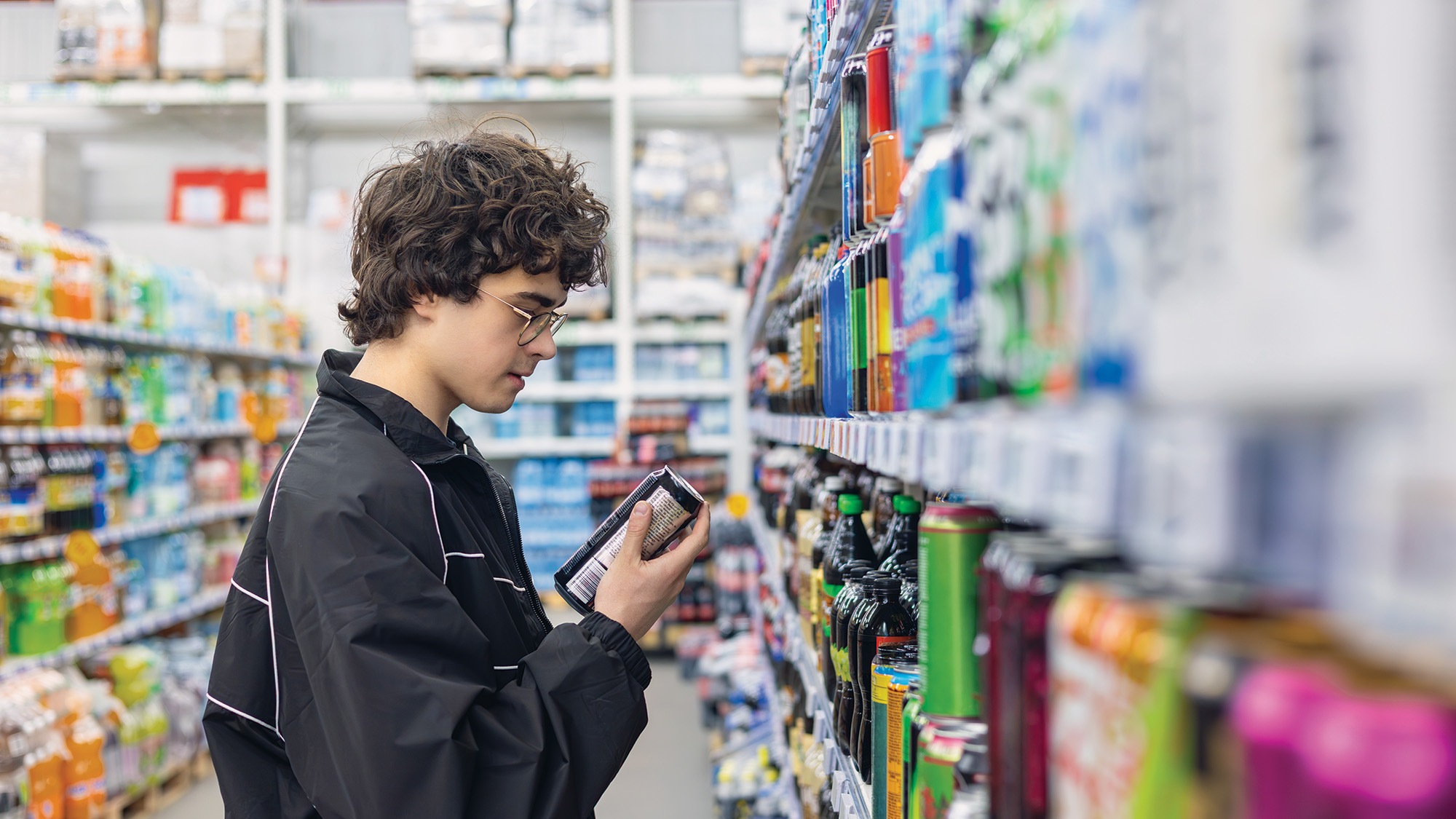
- Recommend careful review of energy drink product labels to identify serving sizes, caffeine content, and cautionary statements.
- Counsel on adverse health effects when taking prescription stimulants and caffeine, such as sleep disruption, anxiety, high blood pressure and rare cases of severe outcomes (e.g., cardiac events like arrhythmias).
- Advise individuals to self-monitor for adverse effects, and to seek care immediately if there are symptoms of arrhythmias such as racing heart with dizziness, chest discomfort, dyspnea or weakness.
- Consider the contribution of caffeine products when assessing reported adverse effects of prescription stimulants.
Take-Home Message
Recognizing increasing population-level use of both prescription stimulant medications and caffeinated energy drinks, concurrent use may increase risk of adverse health effects in youth. A brief discussion about caffeine intake when dispensing stimulant medications can help identify preventable issues and reinforce safe medication use.
About the authors: The authors are a group of physicians and resident physicians specializing in Public Health and Preventive Medicine and practicing in B.C.
- McCreary Centre Society. BC Adolescent Health Survey 2023. Available from: https://mccrearysociety.ca/about_bcahs/
- CHART Lab. Youth Development Instrument 2025. Available from: https://chartlab.ca/about-ydi/
- Farzam K, Faizy RM, Saadabadi A. Stimulants. In: StatPearls [Internet]. 2023. Available from: http://www.ncbi.nlm.nih.gov/books/NBK539896/
- Health Canada. Caffeine in Foods [Internet]. 2025. Available from: https://www.canada.ca/en/health-canada/services/food-nutrition/food-safety/food-additives/caffeine-foods.html
- Cormier B, Reid JL, Hammond D. Perceptions of caffeinated drinks among youth and young adults in Canada. Health Promot Chronic Dis Prev Can. 2018 May;38(5):214–8.
- Ayoub C, Pritchard M, Bagnato M, Remedios L, Potvin Kent M. The extent of energy drink marketing on Canadian social media. BMC Public Health. 2023 Apr 25;23(1). doi:10.1186/s12889-023-15437-w
- Dobrek L. The review on adverse effects of energy drinks and their potential drug interactions. Nutrients. 2025 Jul 25;17(15):2435. doi:10.3390/nu17152435
- HealthLinkBC. Caffeinated energy drinks [Internet]. 2023. Available from: https://www.healthlinkbc.ca/sites/default/files/documents/healthfiles/hfile109.pdf
- Suresh S, Temple JL. Relationships among soda and energy drink consumption, substance use, mental health and risk-taking behavior in adolescents. Children. 2024 Nov 27;11(12):1448. doi:10.3390/children11121448
- CBC. Quebec tables bill cracking down on sale of energy drinks for teens [Internet]. Available from: https://www.cbc.ca/news/canada/montreal/quebec-energy-drinks-teens-9.7224511