
New, easier-to-use nasal naloxone is now available free for at-risk people at community pharmacies participating in the Take Home Naloxone program in British Columbia, in addition to injectable naloxone.
The life-saving medication had already been available in its injectable form for years at community pharmacies, where it is provided free to individuals at risk of overdose, or people likely to witness an overdose.
The new publicly funded supply of nasal naloxone is relatively simple to use. The user needs only to place the device directly into the recipient’s nostril, before pushing the activator button to release the spray. The injectable version of naloxone, which has been distributed since 2012, is less intuitive to use, particularly for untrained individuals. It requires the person administering the dose to break a glass ampoule, draw the dose into a syringe, before injecting the medication.
However, until February 2026, outside of pilot projects and some programs for First Nations, supplies of nasal naloxone would have had to be privately purchased, and only the injectable version was available for free. This changed in February 2026, when the B.C. government announced $18 million in funding to help pay for nasal naloxone kits, which will make up about half of the approximately 400,000 kits of naloxone that are distributed each year.
Naloxone is a medication that reverses the effects of overdose from opioids, such as heroin, fentanyl, oxycodone, methadone and hydromorphone.
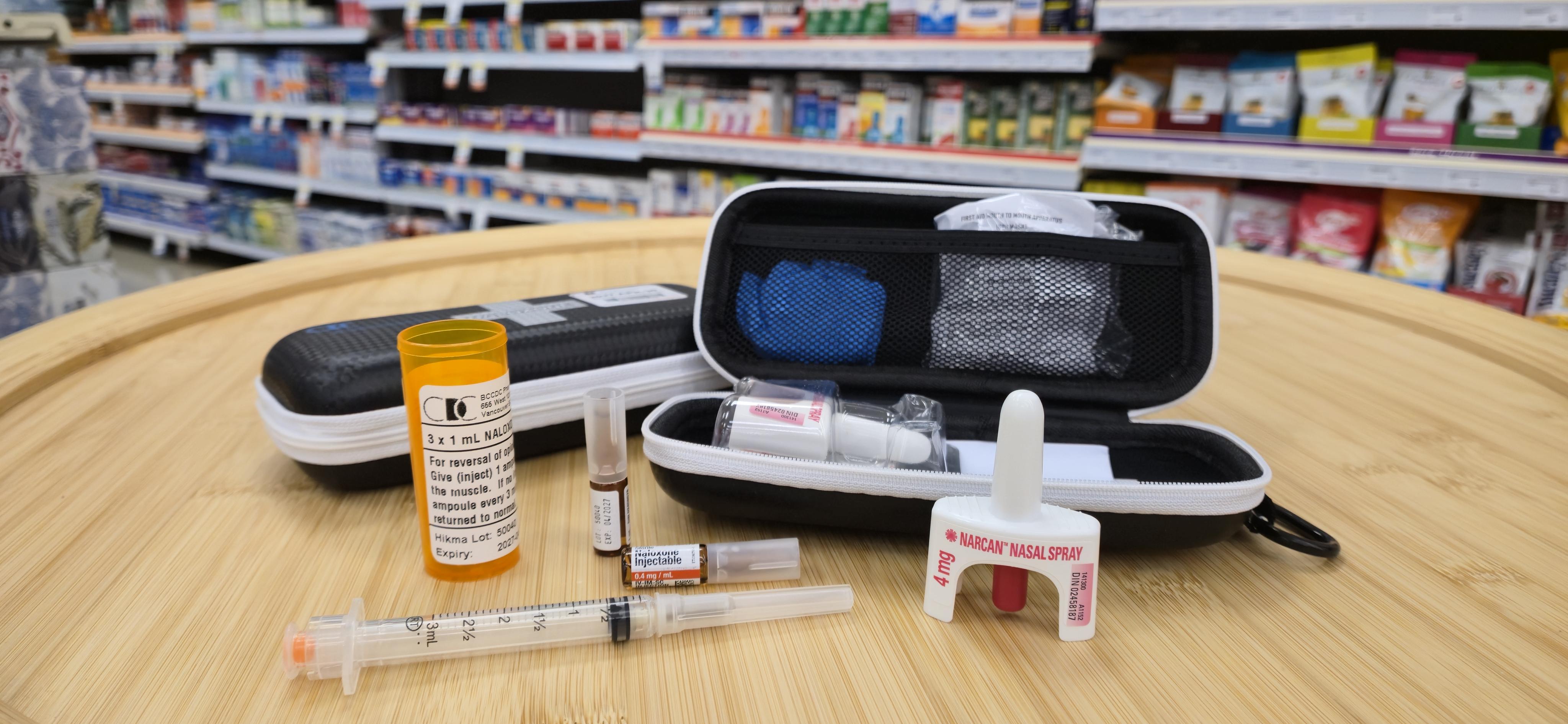
The injectable version of naloxone, which has been available in B.C. since 2012 (left) next to the nasally administered version, introduced as a publicly funded option in B.C. in 2026. Below: The inside of a nasal naloxone kit. Each kit contains two doses along with instructions and personal protective equipment.
In total, there are 2,400 sites in B.C. where the public can pick up a take-home naloxone kit and receive training on using the kits, among them more than 900 community pharmacies. To locate a pharmacy distributing a take-home naloxone kit, visit towardtheheart.com/site-finder.
Pharmacies participating in the program can reach out to their regular distributors for supplies. Not all pharmacy distributors stock naloxone kits, and those pharmacies that cannot order kits from their regular distributor should contact naloxone@bccdc.ca to inquire about eligibility.
The publicly funded naloxone doses available at pharmacies are intended for individuals. If a large group or business would like their own naloxone supplies on hand, they can consider purchasing a private supply from a pharmacy or pharmacy distributor. Publicly funded schools seeking supplies can contact PDCCustomerSer@gov.bc.ca or (604) 927-2000 to order.
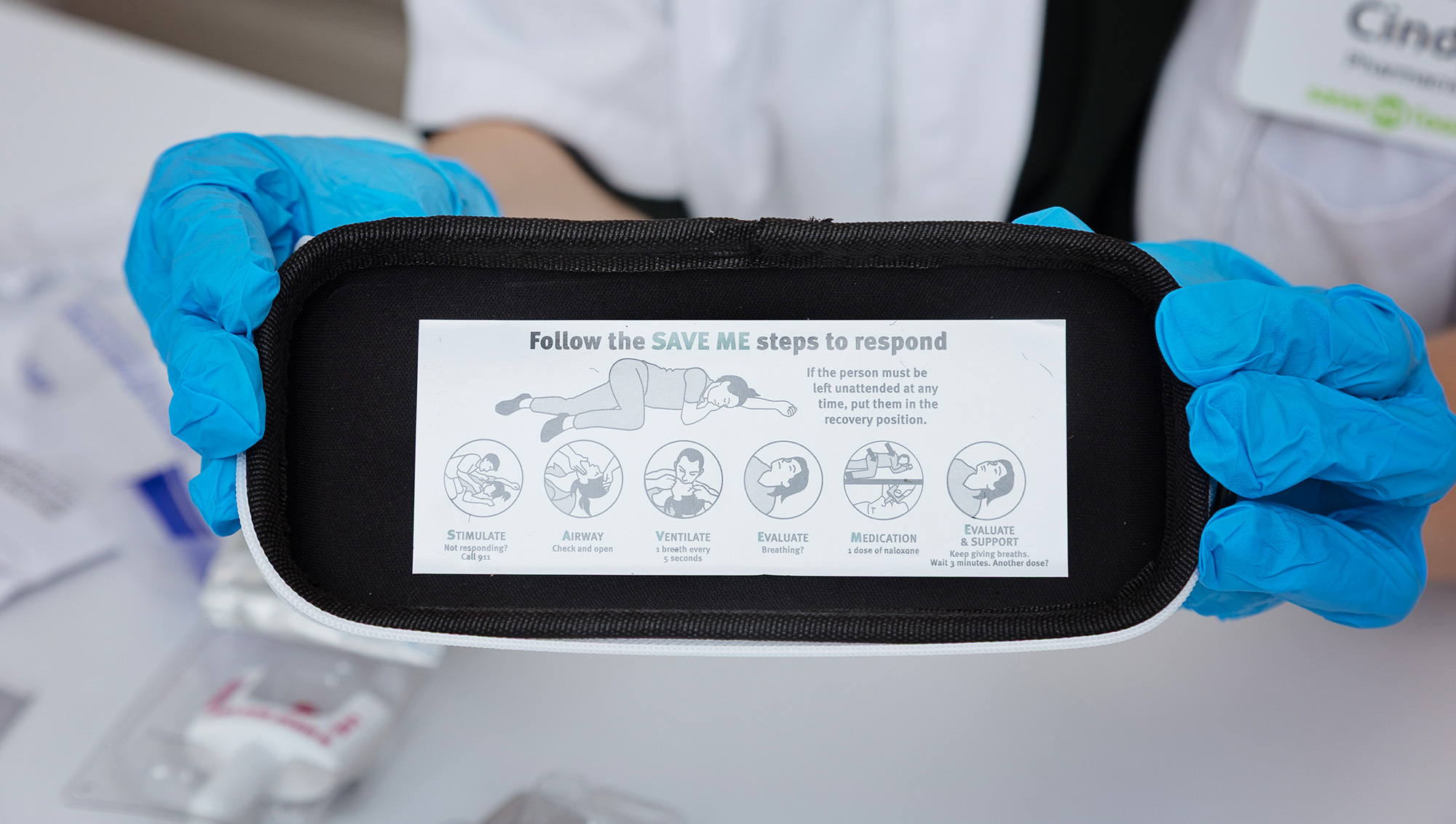
Each kit contains instructions to guide the user on the steps before during and after administering naloxone.
Save-On-Foods pharmacist Cindy Chen, who works at multiple stores in White Rock, Ladner and Surrey, gave a demonstration on how to use the kit. Each kit comes with two doses of nasal naloxone inside a zippered pouch. Instructions on how to use the medication are also labelled within the package.
“First, approach the person and try to get a response. Call their name or use your hands to grab their shoulders, squeeze their muscles, and see if they respond. If they don’t, check their airway. Make sure there are no objects stuck in their airway, via the chin tilt head lift, and make sure there are no objects inside their mouth obstructing their airway. If there is, remove them,” Chen said.
Next, she said, check whether the person is breathing by placing your ear next to the person’s mouth, turning to look towards their chest. Observe whether the person is breathing, whether a breath can be felt, or whether the chest is rising and falling. Count how many seconds it takes them to take a breath.
“If you find the patient is not breathing or is breathing very slowly, less than one breath every five seconds, then it may be time to administer naloxone,” Chen said.
“Make sure you put your gloves on. When you’re ready to use the nasal naloxone device, put two fingers on top of the device and your thumb on the actuator button, insert the device inside the nose with your fingers touching their nostril, and spray directly into their nose. The nasal spray should work within two to five minutes, observe their response and breathing. During this time, make sure you call 911 or emergency response.”
Naloxone often wears off faster than many opioids, and if symptoms return, a second dose may be needed.
“In the next 30 to 120 minutes, continue to observe them to make sure their breathing continues to remain normal. If not, administer a second dose after going through each of the steps again,” Chen said.
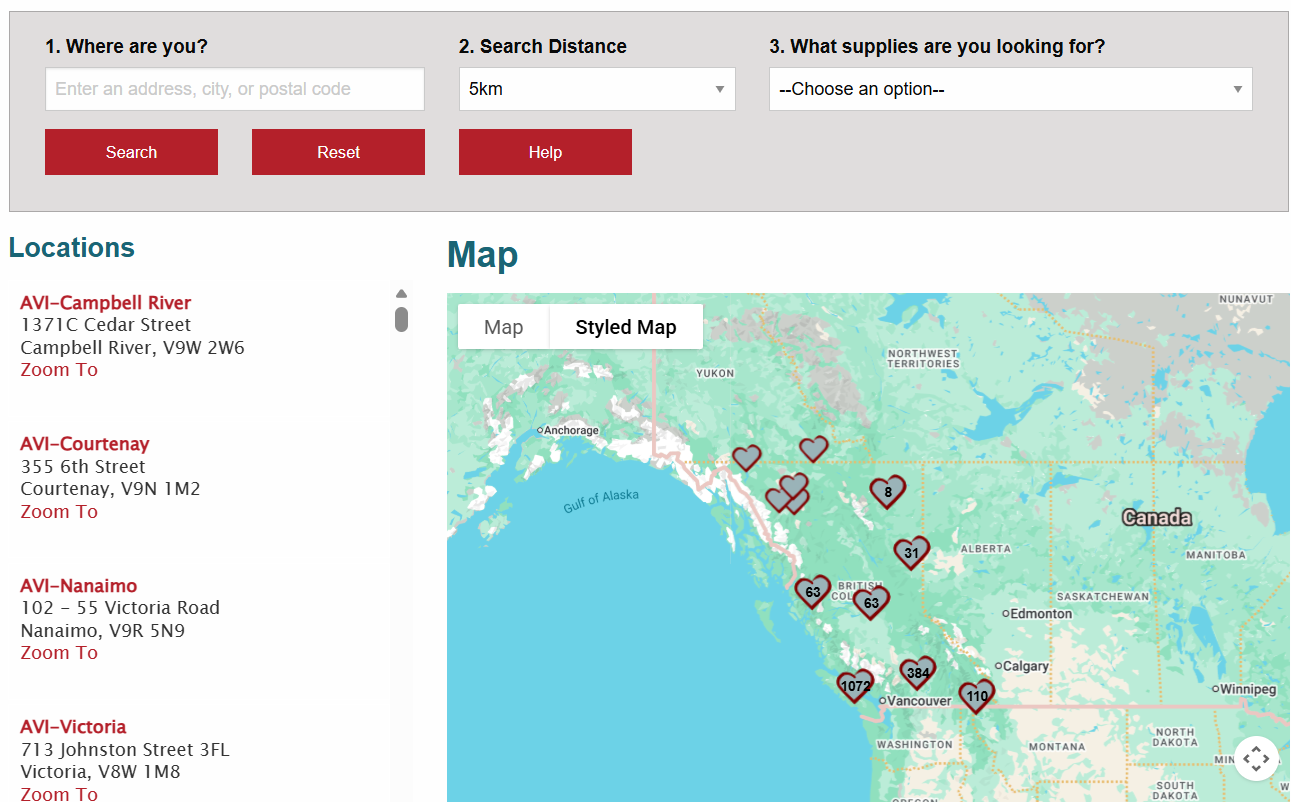
A map of where to pick up naloxone kits and receive training on using them is available at https://towardtheheart.com/site-finder
The B.C. Centre for Disease Control said nasal naloxone can take longer to be absorbed than injectable naloxone, usually three to four minutes, but up to 17 minutes to work, and that nasal naloxone may be more likely to cause sudden opioid withdrawal symptoms in daily users. The product monograph for NARCAN®, a brand name of nasal naloxone, recommends calling 911 before administration, as does the BCCDC. The BCCDC also recommends following the SAVE ME steps, printed as instructions on each kit. These instructions recommend providing ventilation, or breaths, after checking the individual’s airway. Training for using the kits is available at towardtheheart.com/naloxone-training.
Aron Ha, pharmacy manager at Shoppers Drug Mart #2277 in Vancouver, said he distributes up to 10 kits per month at his store. Initially, his pharmacy received supplies from the BCCDC, but more recently, his own chain’s distributor has begun stocking their own supplies.
“Our pharmacy is in the heart of downtown Vancouver, and we usually have lots of inquiries about whether we have naloxone kits or nasal sprays available or not,” he said. “I think nasal naloxone is a great alternative to the traditional injection. The nasal spray is much more convenient and a lot faster to administer. People may not have the physical capacity to take out the syringe and snap open an ampoule during urgent overdose situations. I am hoping with time that more people will be able to have access to this.”
Jarvis Li, pharmacy manager at London Drugs #37 in Delta, stocks both the injectable and nasal naloxone supplies at his store. When a patient comes in asking about naloxone, he would explain both options, first asking whether the patient is comfortable administering a needle injection.
“At the end of the day, the injection formulation is still more affordable, so for the people that are able, I would say I prefer counselling the traditional method,” Li said. “Now if it turns out that they want to introduce naloxone to other family members, such as their kids for backup to help them administer naloxone in case they need it, then the nasal naloxone might make more sense to consider.”
With each kit, he would open up one of them to show the patient the components inside each kit, demonstrate first-aid steps such as assessing the patient, trying to stimulate them, checking airway, before demonstrating how to administer the medication.
“If you suspect someone is overdosed and you’re unsure whether they’ve overdosed, just give them the shot. You can’t overdose on naloxone. I’d rather you give the shot in case you save a life,” Li said.
“The new nasal naloxone is a lot less tedious than the injection. Instead of fumbling with needles and equipment, you open the package, it goes up in the nose, and you just push the entire dose into the presumably unconscious person.”
Li applauded the provincial government for making an investment into funding nasal naloxone supplies, pointing to its accessibility and ease of use.
“Long story short, it’s just a lot easier for the average person and general public to use more effectively.”
The BCCDC said nasal naloxone is easier for someone with dexterity, vision or cognitive challenges and contains a higher dose, which may be better for larger individuals, while injectable naloxone can be easier to absorb and is more suitable if someone has nasal issues. The nasal version may also be preferred in areas with cold weather, where thick layers of clothing can make it challenging to administer an injection.
Training to use naloxone is available at naloxonetraining.app.