
Dr. Ryan Henderson, pharmacy manager at Walmart #1077 Campbell River, has built his career around patient-centred care and lifelong learning. Since graduating from the University of British Columbia in 2009, he has pursued a range of additional degrees, certifications and specialized training, all with the goal of expanding his knowledge and enhancing the care he provides for his Vancouver Island community.
Tell me about your journey in pharmacy so far.
I have always had an interest in science and its applications of which led me to decide on a career in pharmacy. I graduated in 2009 at the University of British Columbia. At the time I authored a couple of papers on lipidology, doing research which looked at amphotericin B, and I was also doing some relief pharmacy work.
Around the time of my graduation, Walmart was building a new store in Campbell River, and through a meeting with the then district manager at Walmart with whom I had met earlier at a conference, I was given the opportunity to become a pharmacy manager. The store opened on June 18, 2010, and I’ve been here since then.
I was brought up in a retail shopping environment. My family used to run a supermarket in England, so I’m familiar with the retail and service side of things. I decided to grow the pharmacy and stay in Campbell River because it’s about building up my patient base, working with my patients, being part of my patients’ therapy team, and the commitment I have with my patients to stay and to provide continuity of care for them.
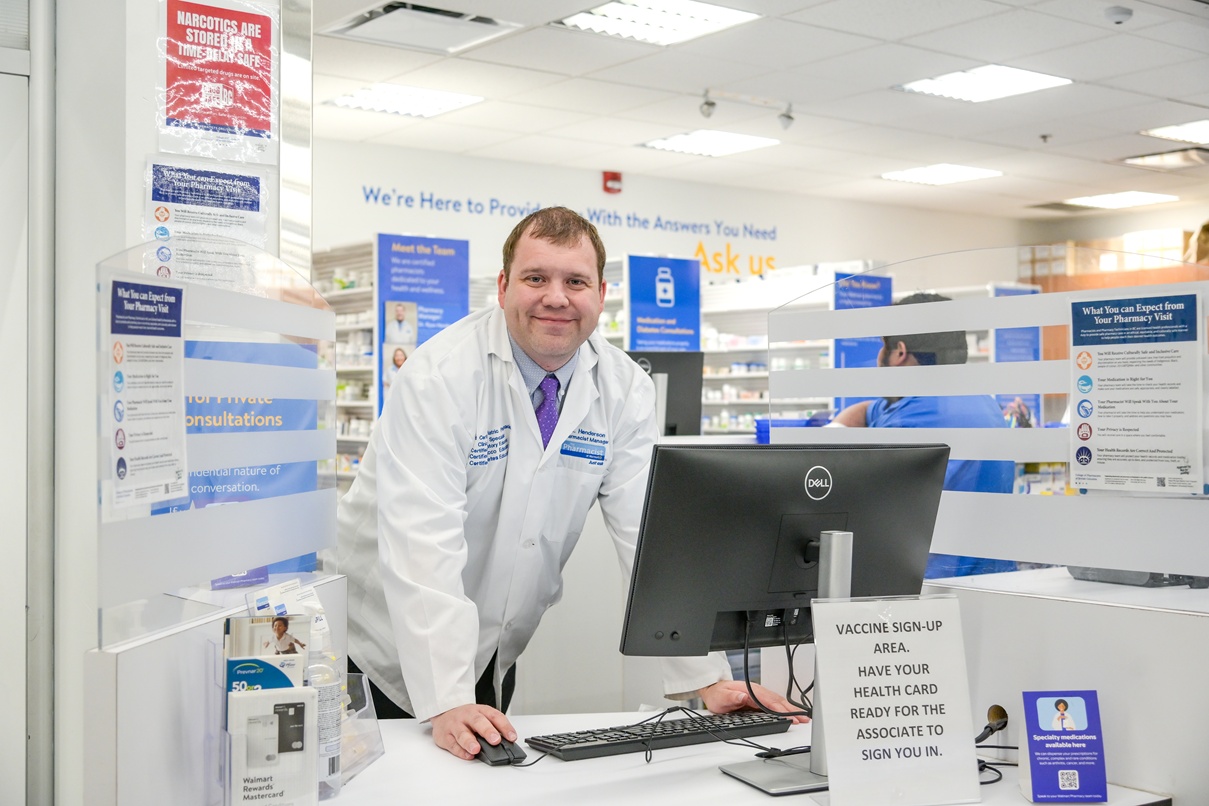
What sets your pharmacy apart from others?
We’re a pharmacy that is interested in improving your health. We’re not interested in necessarily getting you in and out the door in 10 minutes. That’s not our goal. We look at working with patients as a partnership.
I think the idea of patient-centred care is an older idea. Nowadays, it’s more modified into a patient partnership, because it’s about every health practitioner individually acting as a partner to the patient. It’s a two-way street. I help open up my patients to provide information for us, and then we work with the patients to provide updates and information for them.
I would say the main thing about this pharmacy that says it’s different is that we’re invested much more into trying to improve your health than competing with pharmacies to get something done in 20 minutes, or 15 minutes or 10 minutes.
There used to be three different walk-in clinics in Campbell River. There are none now. So a lot of our patients will come into my pharmacy as a primary resource, for minor ailments and any other medical concerns, they will ask for advice on what they should do. And in the pharmacy, we also offer a full scope of services to help from minor ailments, injections, medication consultations, and opioid agonist treatment.
What is your philosophy when it comes to patient care?
Campbell River is a close-knit community with a diverse demographic. In the summer we have a lot of tourists visit here, which adds to the diversity. There is a high First Nations population, and we have a reasonably high elderly population here as well, in addition to a population of logging and fishing industry workers.
My philosophy is to get to know the patient first, to understand what their health concerns are, and to spend time with them.
Usually, what I would do if I had a patient come in with a lot of health concerns is to do a medication review. I’ll bring them into the counselling room, or if they’re really nervous, we might even walk into the garden centre, and I would spend an hour with the patient, one-on-one, to go through their general profile, what they need, and what their concerns are.
Then, I’d work out a plan with them, with their doctor and health-care team, and see what I can recommend to make things better. Later on, we would do follow-ups and care plans to see how things are going forward.
When a pharmacist does a full medication review, you should be looking at vital signs. A medication review should involve a physical assessment, so you can check their blood sugars, their blood pressure, their breathing. It’s trying to get a full picture, so you really need to spend a lot of time.
When I’ve seen pharmacists do it quickly, they go through the medications and the list, and there’s not necessarily an understanding there or a thought process of “how can I make your health better from where it is now”, under your terms, from what you want from your health. Once you’ve done a complete picture with the patient, then you can do targeted reviews, targeting specific disease states and spend much more quality time later on with the patient’s concerns.
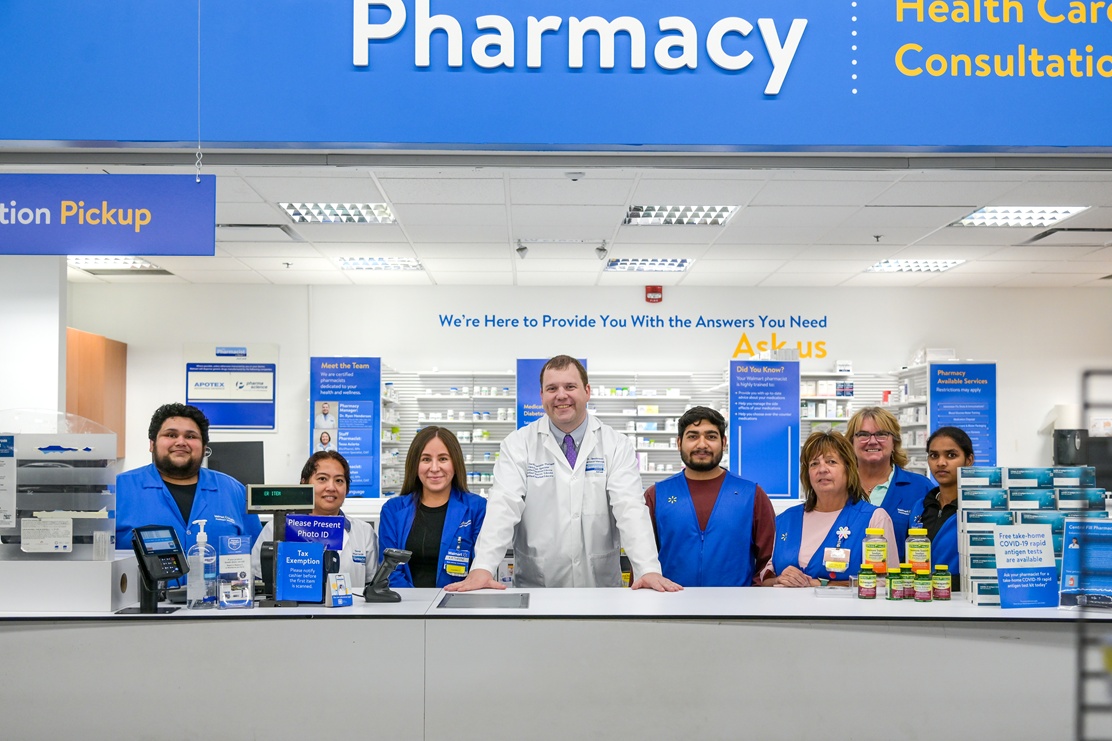
How have you approached continuous improvement as a community pharmacist?
After I graduated from UBC, I then completed the full doctorate at the University of Florida and a Masters in Business Administration at the University of Edinburgh, plus additional business certifications such as Entry Certificate in Business Analysis and Certified Associate in Project Management.
I also received my certified tobacco educator designation, respiratory educator, diabetes educator, board certified geriatric practitioner, the training for opioid agonist treatment and injectable opioid agonist treatment, one of only 22 recipients of the Council for Continuing Pharmaceutical Education Diamond Award, the specialty compounding course, the ADAPT program, and am a certified lipid specialist as well.
For me, it was really an interest to expand my horizon and to keep learning things. The main thing I usually do is, whenever I come across something I don’t understand fully, I go back and learn it and try to master that for the next time.
I’ve always done quite a lot of things all at once, so when I was taking some of my credentials, I would do them each night. When I was completing my PharmD in Florida, I would fly down for 12 weekends, and then I completed my practicum over the course of four months. Basically, I would take all my vacation and leisure time to do that.
How has your educational background and your approach to patients helped you collaborate with other health providers?
It’s building relationships up, so it takes time. Once they get comfortable and they see our recommendations, it really helps build up that rapport and it makes things much better. Rapport with doctors is really something you have to build up over time. It takes good communication skills as well.
One thing I try to reinforce with UBC students when they come down here is to set a good way of doing SOAP (Subjective, Objective, Assessment, Plan) notes, because most other health-care professionals use SOAP notes.
A lot of pharmacy students, they understand the big care plans, but if you send the doctor that, they will never read it. So understanding how to write SOAP notes to communicate with them is very important, and doing so also helps other health practitioners see how pharmacist medication reviews and things like that are being done to help their patients. I pride myself with any student to try and make their learning experience the best they have ever had.
What are some things you are proudest of as a pharmacist?
Mostly, the patient interactions. The build-up with patients, getting to know patients, and seeing the benefits that I’ve been able to help with.
For example, I’ve had just in the last year three patients I referred directly to the hospital, just from an initial consult with a review. Two of them had strokes while they were in the hospital and we managed to get them straight to the emergency department before that happened. I feel that this level of care has really contributed to the community.
It’s being able to make huge differences in patients’ lives, that’s the thing I’ve been most proud of.
Do you have any thoughts about the future of community pharmacy?
Pharmacy is all about dynamic changes to practice. When I worked in Florida, the clinical structure there was a little different. The doctor would do the diagnosis and then pass on to the pharmacist the information to make a recommendation for therapy. I think pharmacists should be considered much more as a therapeutic specialist, where doctors are more of a diagnostic specialist.
I think it will branch out so that pharmacists who are more specialized will start to do more therapy work, they’ll be making more therapeutic recommendations and will take on greater ailments. You may get categories of pharmacists, where in some categories you will have an expanded scope to do therapeutic prescriptions, or take a bigger role within walk-in clinics.