
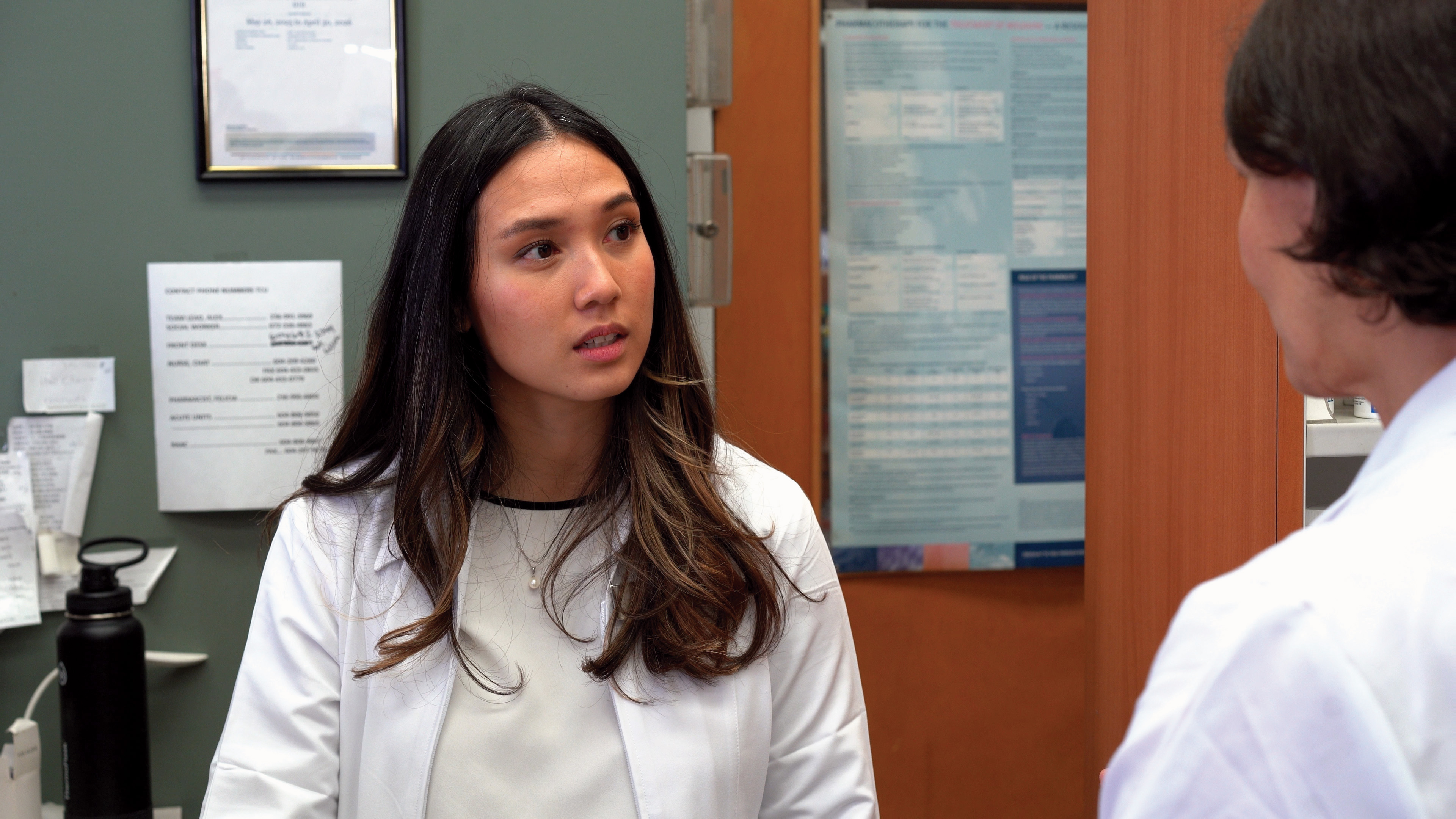
Thao Dao (left) received the BC Pharmacy Association's New Practitioner Award in May 2026.
By Thao Dao, PharmD
In pharmacy school, you spend years learning to be a good pharmacist. I knew how to assess patients, make clinical decisions, and help people navigate their medications. What I was not taught was how to run a business, lead a team, and make decisions that affect an entire pharmacy.
Suddenly, being a good pharmacist was only part of the job.
Just two years after graduating from the University of Waterloo School of Pharmacy, I became the Pharmacy Operator at Burrard Pharmasave in Vancouver, overseeing both the dispensary and front store.
I was excited by the opportunity, but quickly realized how much I still had to learn. Looking back, some of my most important lessons came not from pharmacy school, but from being uncomfortable, making difficult decisions, and learning as I went.
Here are five things I wish I had known before stepping into management.
1) You don't need to have all the answers.
As a young pharmacist leading people who have years of experience, I have felt pressure to prove myself. It can seem as though you need an immediate answer to questions and unwavering confidence in every decision.
I have learned that confidence does not mean having an answer on the spot. Making a decision quickly is not the same as making a good decision.
As a manager, decisions rarely exist in isolation. A change can affect staff, patient care, pharmacy operations, and financial performance. Before acting, I am learning to step back and consider the bigger picture. What information am I missing? What are the potential consequences of each option? Who will be affected, now and down the road?
That does not mean overthinking every decision. It means gathering enough information to make informed choices, weighing all options, and accepting responsibility for the outcomes. Sometimes, that means seeking more information; other times, it means moving forward with what I know and adjusting as I learn.
You do not need to know everything to be a good leader. You need the humility to recognize what you don't know, the discipline to make informed decisions, and the confidence to keep learning.
2) Good communication turns a group of individuals into a team.
Being a manager is not simply telling people what to do. It means listening, asking questions, and recognizing that the best insights can come from your own team.
My team has experiences and perspectives I do not. The people carrying out the daily workflow may recognize challenges or opportunities that are not obvious from a management perspective. Learning from them helps me become a better leader while showing them that their contributions matter.
Transparency is equally important. I believe in being open about both the good and the bad, including the reasoning behind decisions and the challenges we face. It is not enough to tell people what needs to be done; they need to understand why it matters. When staff understand how a decision affects patients, colleagues, and pharmacy operations, they are more likely to take ownership rather than simply follow instructions.
I also bring my team into problem-solving. If I have a new idea, I want their feedback. They might say it’s a terrible idea, or they may say, "Let's try it!" Either response is valuable.
Not every idea will work, and that is okay. If we can identify what went wrong and adjust, the attempt still has value. And when things do work, we should celebrate those successes.
Strong teams are built through transparency, mutual respect, and a willingness to listen, learn, and improve together.
3) Trust is earned one interaction at a time, especially when things change.
When you take over a pharmacy, you are stepping into a community of patients who have relationships with that pharmacy spanning years.
As a new manager, it is tempting to introduce changes right away. But what looks like an improvement to you may feel like an unnecessary disruption to someone accustomed to doing things a certain way.
I have learned that trust takes time. You cannot expect patients to trust you simply because you are in charge. You have to demonstrate that you listen, care about their needs, and follow through on your promises.
Sometimes, that means going the extra mile for someone accustomed to the previous management. It means listening to concerns, finding solutions when something goes wrong, and recognizing that not every existing process needs to change.
My goal is not to prove that I am different from the previous management. It is to show, through my actions, that patients and customers can continue to trust their pharmacy.
You build credibility through the small things you do consistently, long before you earn it through the big things you accomplish.
4) Being a great pharmacist does not automatically make you a great pharmacy operator.
Alongside my clinical responsibilities as a pharmacist, I also oversee staffing, financial performance, inventory, workflow, customer service, and the administrative work required to keep the pharmacy running as a manager. Learning the finances is an ongoing process, as has balancing these responsibilities with the direct patient care that initially drew me to pharmacy.
It can be difficult to step away from clinical work when operational issues demand your attention. I am learning that managing a pharmacy is not about doing everything myself; it is about prioritizing, delegating effectively, and building systems that help the entire team provide excellent care.
This transition has reminded me that looking after others requires looking after myself. We regularly encourage patients to exercise, manage stress, and make time for things they enjoy. We need to take our own advice. For me, that means protecting time outside work, staying active, and pursuing personal goals. Self-care is not something to earn after finishing an endless to-do list. It is part of sustaining a career in which I can continue to show up for others.
You cannot pour into your team and patients indefinitely without making time to replenish yourself, too.
5) Say yes, even when you are unsure you are ready.
One piece of advice I would give my younger self would be to say yes to opportunities that challenge me, even when I feel uncomfortable or unsure. My past experiences have shaped the pharmacist and leader I am today. Working as a relief pharmacist after graduating exposed me to different management styles and workflows. I served in rural and Indigenous communities, and cared for patients experiencing substance use disorders. None of these experiences required me to know everything beforehand. They required me to be willing to learn.
Becoming a Pharmacy Operator was another opportunity to grow beyond clinical practice. I am still learning, and oftentimes the responsibilities feel overwhelming. But I would not have developed the skills I have today if I had waited until I felt completely ready. So, to the young pharmacists entering leadership: It can be tempting to wait until you have more experience, confidence, or another qualification before putting yourself forward. We can become so focused on what we do not yet know that we overlook what we already bring to the table. Saying yes does not mean accepting every opportunity regardless of your capacity. It means not automatically disqualifying yourself because something feels unfamiliar or intimidating.
You do not have to feel ready to begin. Sometimes, you become ready by beginning.
Looking ahead
I am still early in my career, with plenty left to learn. Leadership is not a destination you reach when you earn a title; it is something you practise every day through your decisions, relationships, and willingness to learn. To the next generation of pharmacists questioning whether they are experienced enough to lead: do not wait for someone else to convince you that you are ready. Seek opportunities, ask questions, learn from mistakes, and surround yourself with people who challenge and support you. Say yes to opportunities that scare you a little. Advocate for yourself. And remember, you do not need to sacrifice your well-being to prove your dedication. Our profession needs pharmacists willing to grow and challenge the status quo. You do not need decades of experience to make meaningful contributions. You need curiosity, compassion, a willingness to learn, and the courage to take that first step.
You do not need to have all the answers to make a difference. You just need to be willing to start.
Thao Dao is a 2023 graduate of the University of Waterloo's Doctor of Pharmacy Program. In 2025, Dao accepted a position as Store Operator at Pharmasave #010 in downtown Vancouver, where she oversees a team of 15 people.