
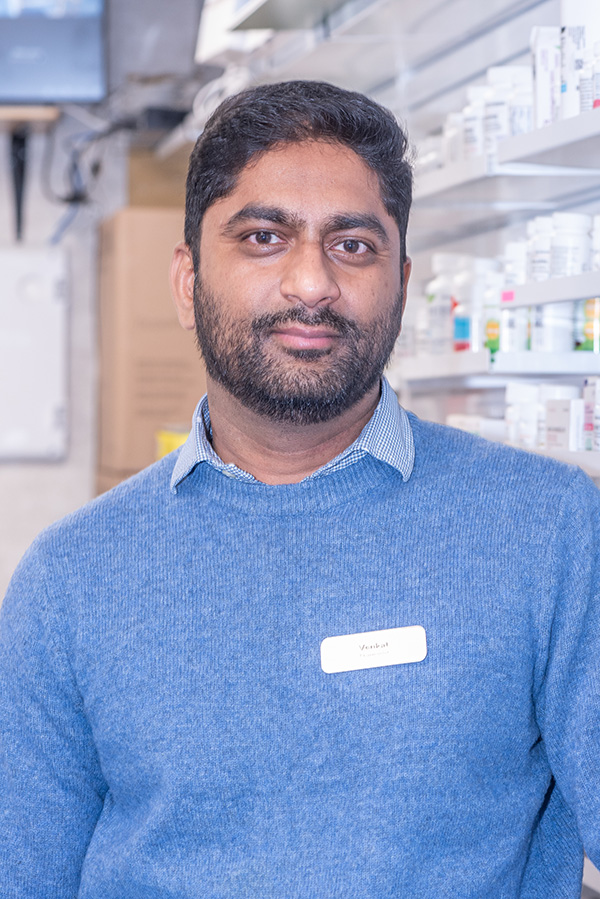
Pharmacist Venkat Sajja had driven past Lytton more than once. He lived in B.C. before, when he owned and operated a pharmacy on Vancouver Island. Lytton is a small community on the Trans-Canada Highway, about an hour north of Hope. Mostly unremarkable, similar to other neighbouring communities: small population, a few commercial businesses, and a train track nearby.
One notable thing about Lytton is how hot it gets in the summer. Indeed, in June 2021, the community made the news when it reached a scorching 49.6 degrees Celsius, setting national records three days in a row.
The next day, it burned. The village was evacuated that evening. Two people died, and the majority of its infrastructure, its buildings and homes, were destroyed. Arguments for the cause of the fire are still being debated in court.
Four years after the deadly wildfire swept through the British Columbian village of Lytton, its residents are trying to rebuild. While the community had reestablished a health clinic, staffed by rotating shifts of doctors, nurses and even a pharmacist, the village still lacked essentials such as a coffee shop or a community pharmacy to dispense the population’s medications.
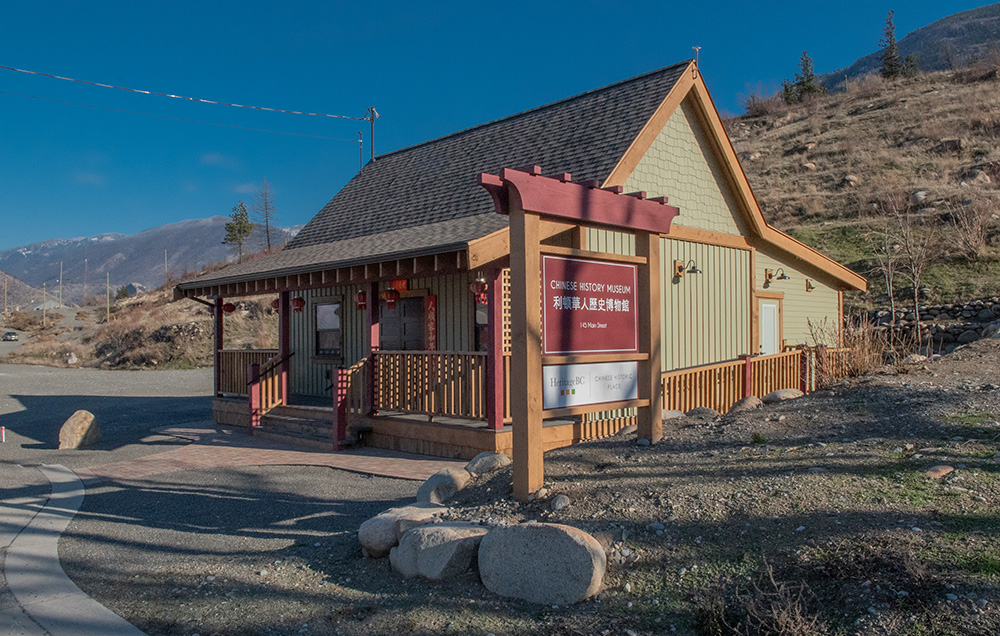
The case for a community pharmacy was there. There had been a pharmacy in the community before, and there were clearly enough residents with medication needs to justify bringing one back. The several-times-a-week medication deliveries co-ordinated by Interior Health were proof of that. But as more time passed on, as the community rebuilt its lost grocery store and even a local museum, there was still no pharmacy.
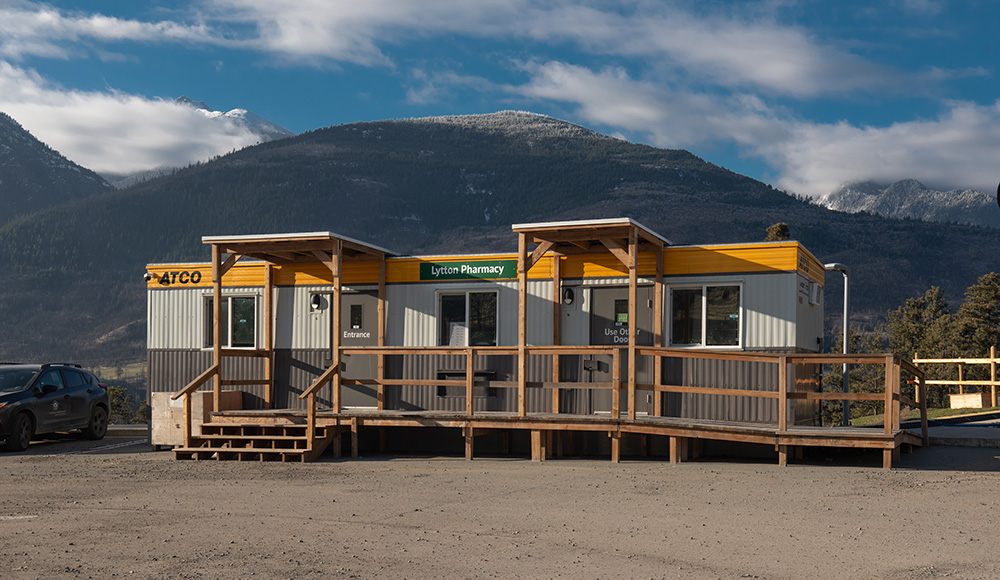
At the time of the fire, Sajja was living in Neepawa, Manitoba, practicing as a hospital pharmacist. He didn’t give it much thought when it appeared on the nightly CBC newscast. It was several provinces away, and fires are, unfortunately, an increasing concern in rural areas. He certainly didn’t expect to hear about the impact of the fire years later. It was late 2024, and his attention was caught by online social media posts. They were from Lytton, a plea from the community for help in its wildfire recovery efforts. They needed business owners to come back. One of the things they needed was a pharmacist to take on the challenge of reopening a permanent community pharmacy space. But why hadn’t anyone stepped in?
The question bothered Sajja. He began doing his research, looking up restart funding grants for the community, reaching out to the local First Nations community, even taking a tour of the village.
“I spoke with the previous pharmacy owner. He’s now working at the Lytton primary care clinic as their pharmacist and is close to retirement. The Chief of the Lytton First Nations and Health Director came out to show me different commercial spaces,” Sajja said. “I was told that, before me, there were five people who came in to try to start a pharmacy. I’m the sixth guy, and it didn’t work out for the previous five.”
Sajja was determined. He was touched by the community’s need, had experience opening a pharmacy before, and lived in rural areas for most of his life. He applied with the College of Pharmacists for a new pharmacy licence, secured an investment through the federal government’s Pacifican Lytton Business Restart Program, hired contractors to build his store, installed heated water pipes so the building had running water, and a hundred other things.
“At times, things we normally take for granted required out-of-the-box thinking,” he said.
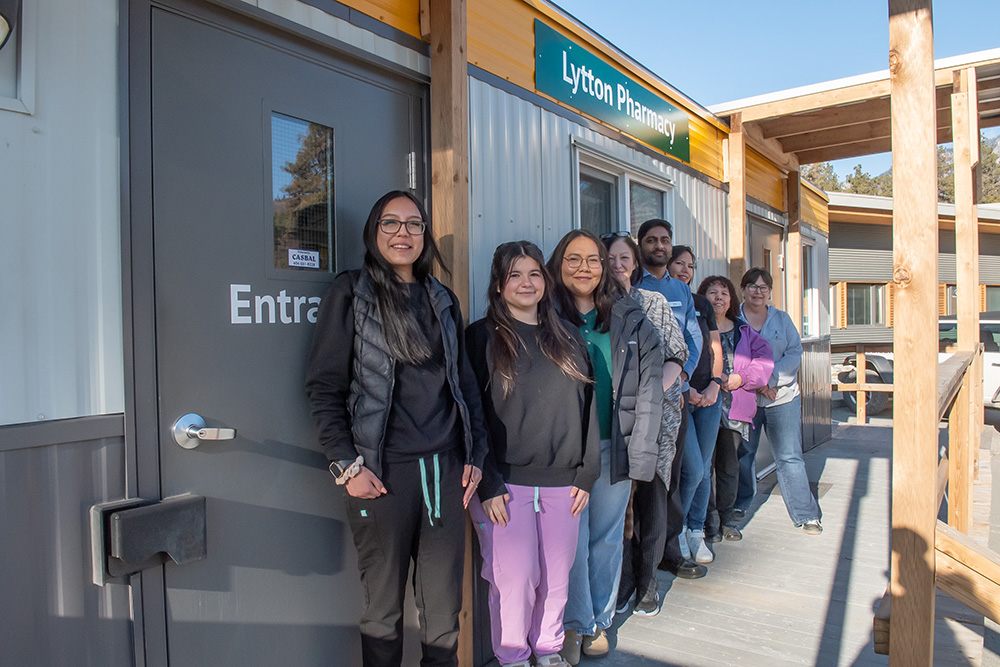
As the first few months of 2025 passed, the space — all 400 square feet of an ATCO container — was becoming a reality. The biggest hurdle was overcome. Now he just needed to figure out how to allocate the space.
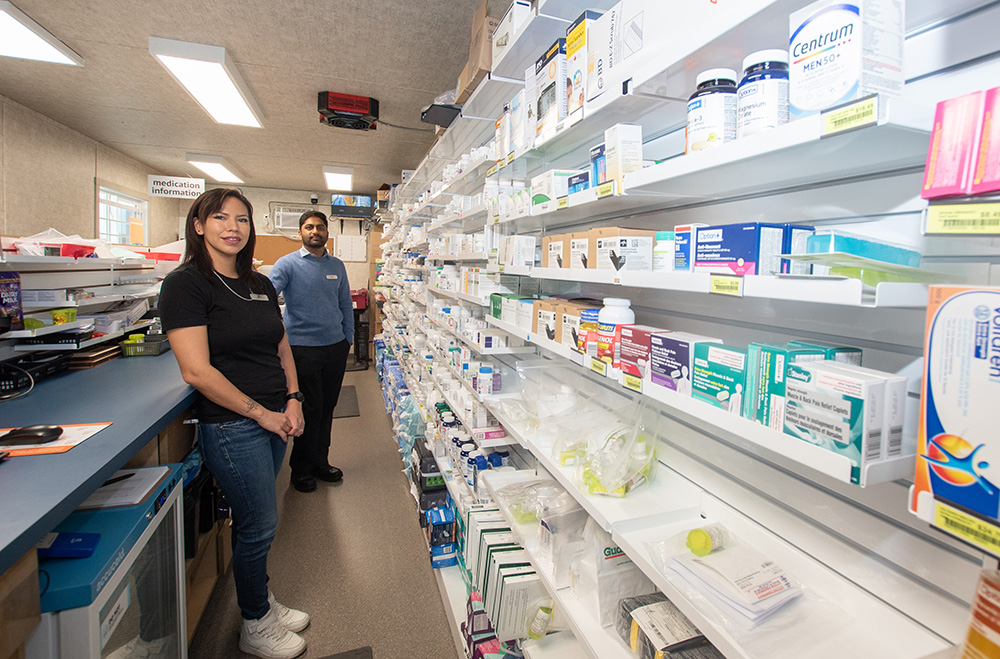
“It’s small, not something we see traditionally. Typically, pharmacies have space dedicated to the dispensary and also some to the front-store, which would require 1,000 square feet minimum,” Sajja said.
“I knew that the community was still having prescription medications coming in by truck. Sometimes it took days, sometimes longer. That was the need. So, most of my space is dedicated for prescription medications, and the remaining space for over-the-counter medications that focus on the essentials. My motto was, I wouldn’t have 10 different pack sizes and four different brands, but I will have what you need for the moment for your situation.”
With two young children at home, Sajja had initially intended to hire a pharmacist to staff the Lytton pharmacy full-time, while he continued to live with his family in Manitoba. But finding a full-time pharmacist proved difficult, and re-opening the pharmacy could not wait. There was pent up demand. In the opening week alone, hundreds of patients transferred into the pharmacy.
“It was quite overwhelming,” Sajja said. “I had just myself and my pharmacy assistant, and I actually reached out to one of my pharmacist friends who also owns a store in the Interior, and he brought himself and another assistant to help for a week.”
Sajja and his family are now living on Lytton First Nation land, in a housing unit reserved for health-care staff. One of his two children commutes two hours daily to and from Ashcroft for school. With businesses such as his pharmacy opening again in the community, an increasing number of Lytton residents who were displaced by fire are returning, too. Sajja estimates that as many as a third of the population still remain dislocated by the fire.
“For my family, uprooting all those things, the community connections they had built in Manitoba, it’s a big change. My eldest child, she said to me, ‘It’s hard. But I know why you’re doing this and I’m going to do what I can to help.’ I was very proud of that,” he said.
The community has been growing on Sajja and his family. While considered a rural community, Lytton is less than a two-hour drive to the Lower Mainland, about the same distance to smaller cities like Merritt, and about two hours to Kamloops.
“It’s very unique. You are in the middle of nowhere, but you are close to everything,” he said.
There are further plans for the pharmacy. With construction in the village centre ongoing, Sajja expects that over the next year or so, the pharmacy will move into a more permanent space with more square footage. He envisions a full-service pharmacy fine-tuned for full scope of practice and a bigger, comprehensive front shop. Already, he’s been hearing about the impact his pharmacy has made for his patients, many of whom are now able to adhere to medication regimens due to the constant presence of a dispensary.
“Some people had stopped taking medications and it’s so heartbreaking to hear. I would see, for example, their last prescription fill for Metformin was in January 2025, and then they gave up after that for months because it got too difficult to manage,” Sajja said.
Stories like these confirm to Sajja that he’s made the right choice for himself and his family. He wants to be a permanent presence for his new community, a population that went through so much hardship, but has remained resilient, welcoming and so deserving of help.
“The people of Lytton, they want to come back. It’s their hometown, it’s where they have their relationships, and their lives are connected to this land. If you look at the town, a year ago, there were barely a handful of houses, but now there are quite a few buildings. People want to return,” he said.
“Our plan is to grow with them.”