
Article sponsored by QuitNow
Every day, pharmacists across British Columbia support patients managing chronic disease, pain, stress, and medication changes. Increasingly, they are also supporting patients living with nicotine dependence, often at critical moments when motivation to quit is highest. QuitNow exists to support you in this important work.
QuitNow Program
QuitNow is dedicated to supporting pharmacists and other healthcare providers to help their clients quit or reduce tobacco and nicotine use. QuitNow is a free program for British Columbians looking to quit or reduce tobacco and e-cigarette use, delivered by the BC Lung Foundation on behalf of the Government of British Columbia.
QuitNow’s mission is to deliver responsive, evidence-based tobacco and nicotine cessation services, with a commitment to continuous quality improvement, innovation, and collaboration with stakeholders across BC.
Our free and confidential services are available for all British Columbia residents aged 10 and up. At QuitNow, we understand that everyone seeks support differently. QuitNow complements pharmacotherapy with behavioural and social supports, which gives clients the best chances for quit success. Our free services include:
- A Personalized Quit Plan to build a custom roadmap, identify goals, and track progress
- One-on-one Coaching with an expert Quit Coach through telephone or live chat
- A Text and Email Tips Program that provides motivational messages and quit strategies between coaching sessions
- The Quit Week Contest which encourages quit attempts with the chance to win a $150 gift card!
- A Community Forum where clients can connect with peers, share experiences, and celebrate progress
- Monthly Breakthrough Group Support Sessions that deliver quit strategies through webinar-style sessions
- Downloadable and printable resources including step-by-step guides, toolkits, infographics, newsletters, and more
Note on traditional tobacco: We acknowledge that traditional tobacco plays an important role in healing practices, rituals, ceremonies, and prayers for many Indigenous communities across Canada. At QuitNow, our work focuses on addressing the use of commercial tobacco products, which are mass-produced by the nicotine industry and contain harmful additives. Any references to tobacco refer to commercial products like cigarettes, cigars, heated tobacco (e.g., IQOS), chewing tobacco, smokeless tobacco (e.g., snuff, snus, and recreational use of oral nicotine pouches outside of nicotine replacement therapy), and e-cigarettes. We are committed to working with Indigenous communities and organizations on commercial tobacco cessation. For Indigenous-specific support with quitting commercial tobacco, visit Talk Tobacco.
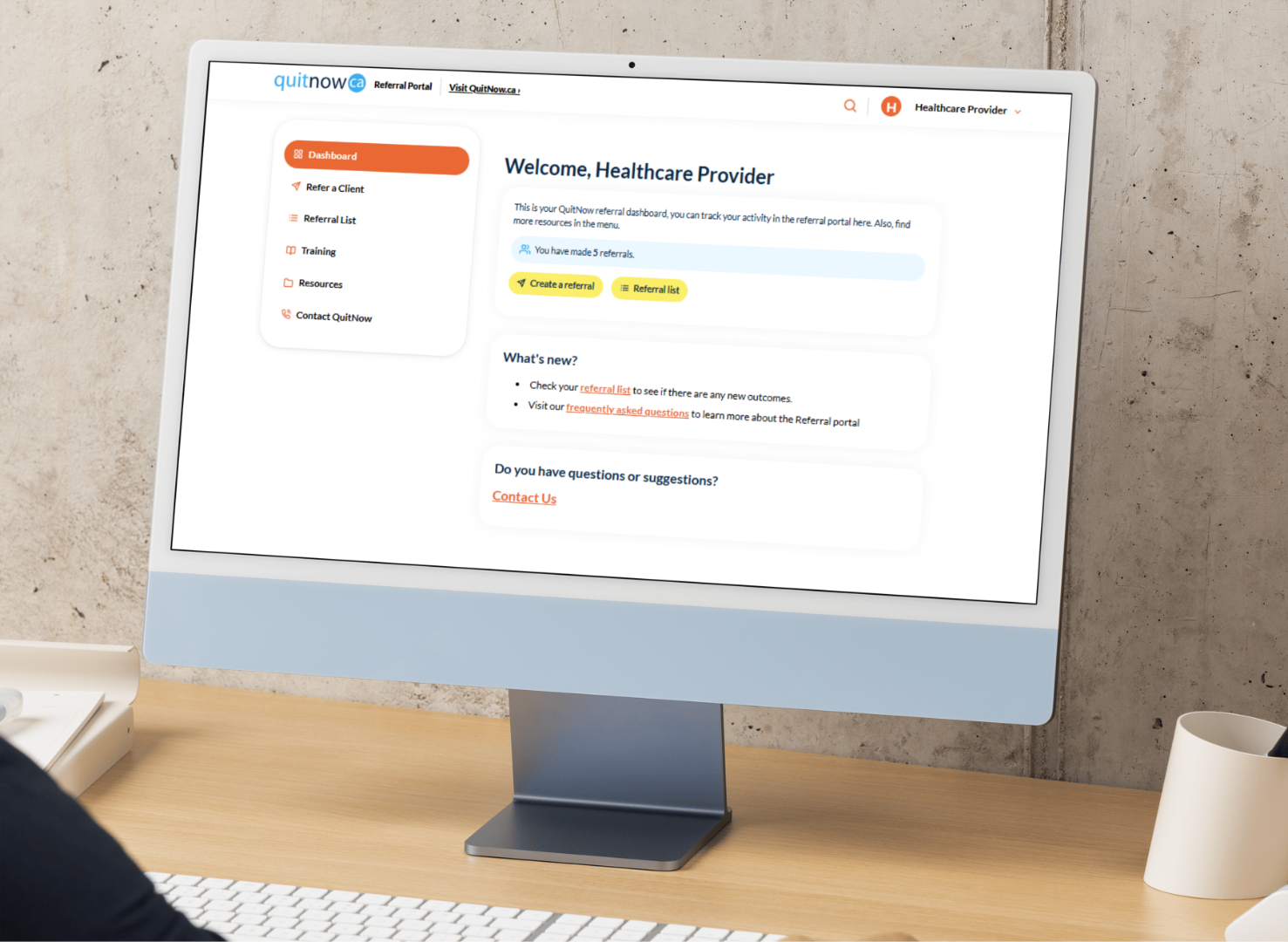 We’re excited to announce that QuitNow recently launched a Referral Portal to streamline the process for healthcare providers like yourself to refer clients to QuitNow. This new system was built to make the referral process easier, faster, and more secure for you and your clients who are seeking support to quit or reduce tobacco and nicotine.
Tobacco Use in British Columbia
Addressing tobacco and nicotine use is a strong public health priority for the province. As frontline healthcare professionals who serve a broad range of clients across BC communities, pharmacists play a critical role in identifying nicotine dependence and supporting patients in their quit journeys. Our goal at QuitNow is to empower pharmacists and other healthcare providers in this work by offering accessible, evidence-based cessation services, tools and resources, and learning opportunities that complement and enhance your practice. We aim to strengthen your capacity to make a meaningful impact on tobacco and nicotine use outcomes in communities across British Columbia.
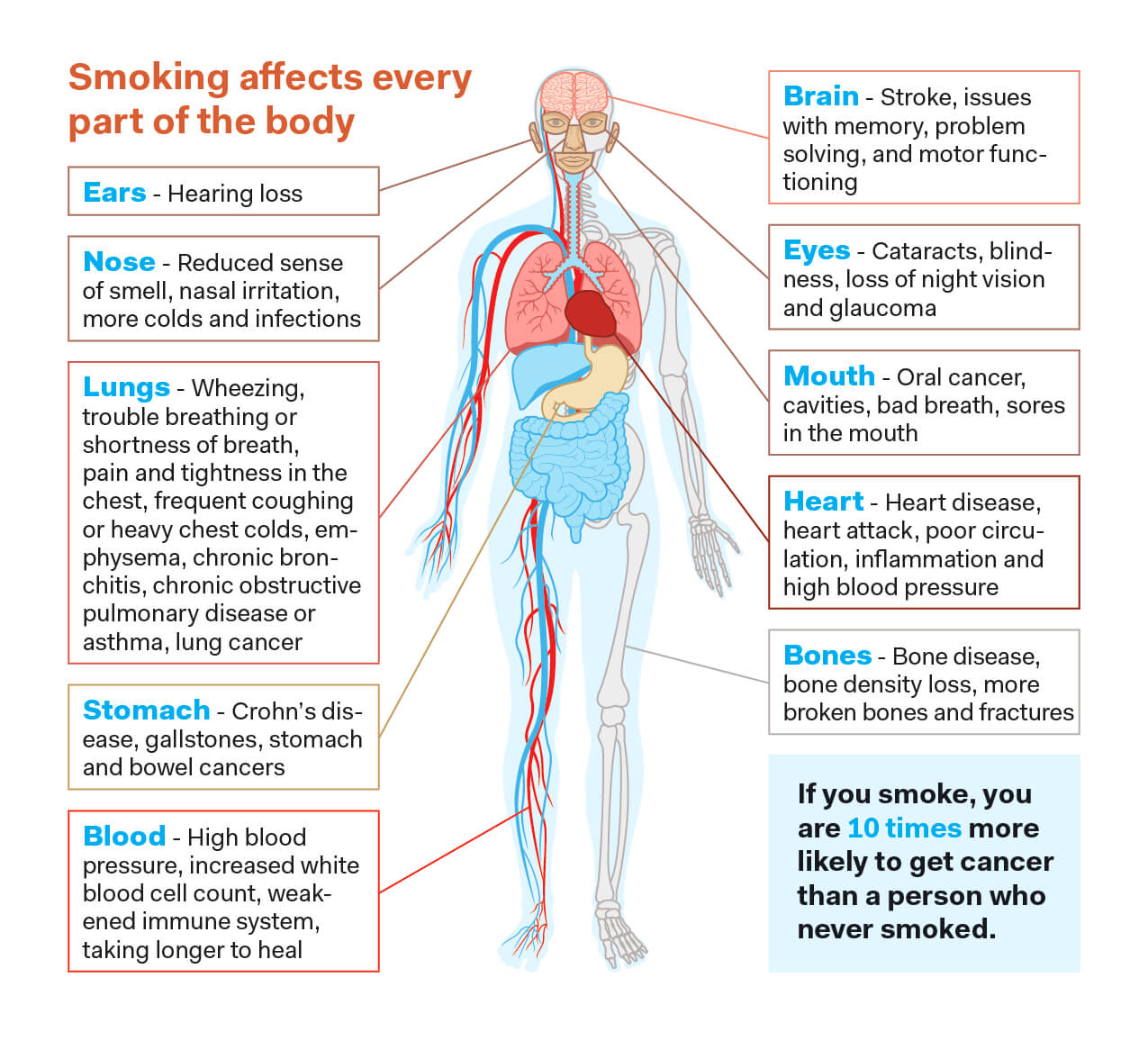
While BC has made significant progress in tobacco prevention and control, tobacco use remains the leading cause of preventable death in the province. Tobacco use contributes to over 6,000 deaths in BC per year from illnesses such as cancers (e.g., lung, oral), cardiovascular diseases, and respiratory diseases1.
While BC has one of the lowest youth smoking rates in the country, youth vaping has substantially increased since its emergence in the nicotine market. Nearly 1 in 6 BC youth in Grades 7 to 12 vape daily, with the most reported age of initiation being 13, a critical period of brain development and addiction vulnerability2. Many youth who have never smoked cigarettes are being introduced to nicotine through vaping. Youth who vape are also more likely to transition into smoking cigarettes later in life.

Curbing smoking and vaping rates will improve health outcomes and quality of life, lower healthcare costs, and create a healthier, tobacco-free environment for current and future generations. This work requires collaborative effort between healthcare providers, behavioural and social support services, and community organizations.
Other services and resources for healthcare providers
Evidence shows that personalized advice from healthcare providers can significantly increase a client’s motivation and confidence to quit. To support pharmacists and other healthcare providers in cessation work, we develop evidence-based presentations, training modules, webinars, conversation tools, and patient-facing resources that can be seamlessly incorporated into both clinical and community pharmacy practices. Our goal is to equip providers with practical, efficient strategies to identify tobacco and nicotine use, initiate quit conversations, and provide tailored support for patients.
Newsletters and webinars
Stay informed with QuitNow updates and the latest news and research in the tobacco and nicotine space!
Educational materials
QuitNow offers a range of plain language educational materials on smoking and vaping cessation that you can share with clients and colleagues. These resources are available at no cost, in both digital formats and printed* copies, to further enhance your capacity to support patients on their quit journey. Patient-focused resources include:
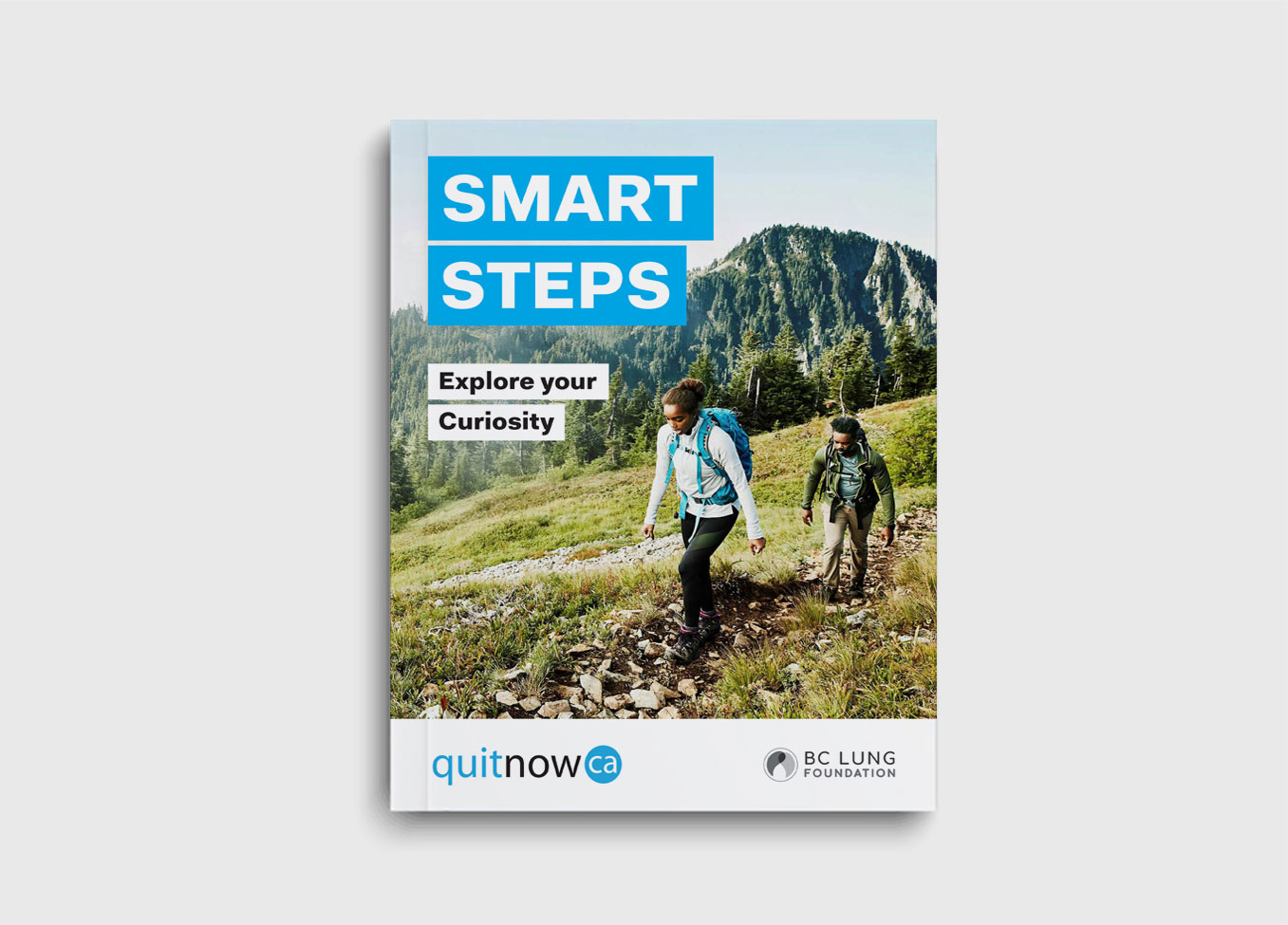
.JPG)
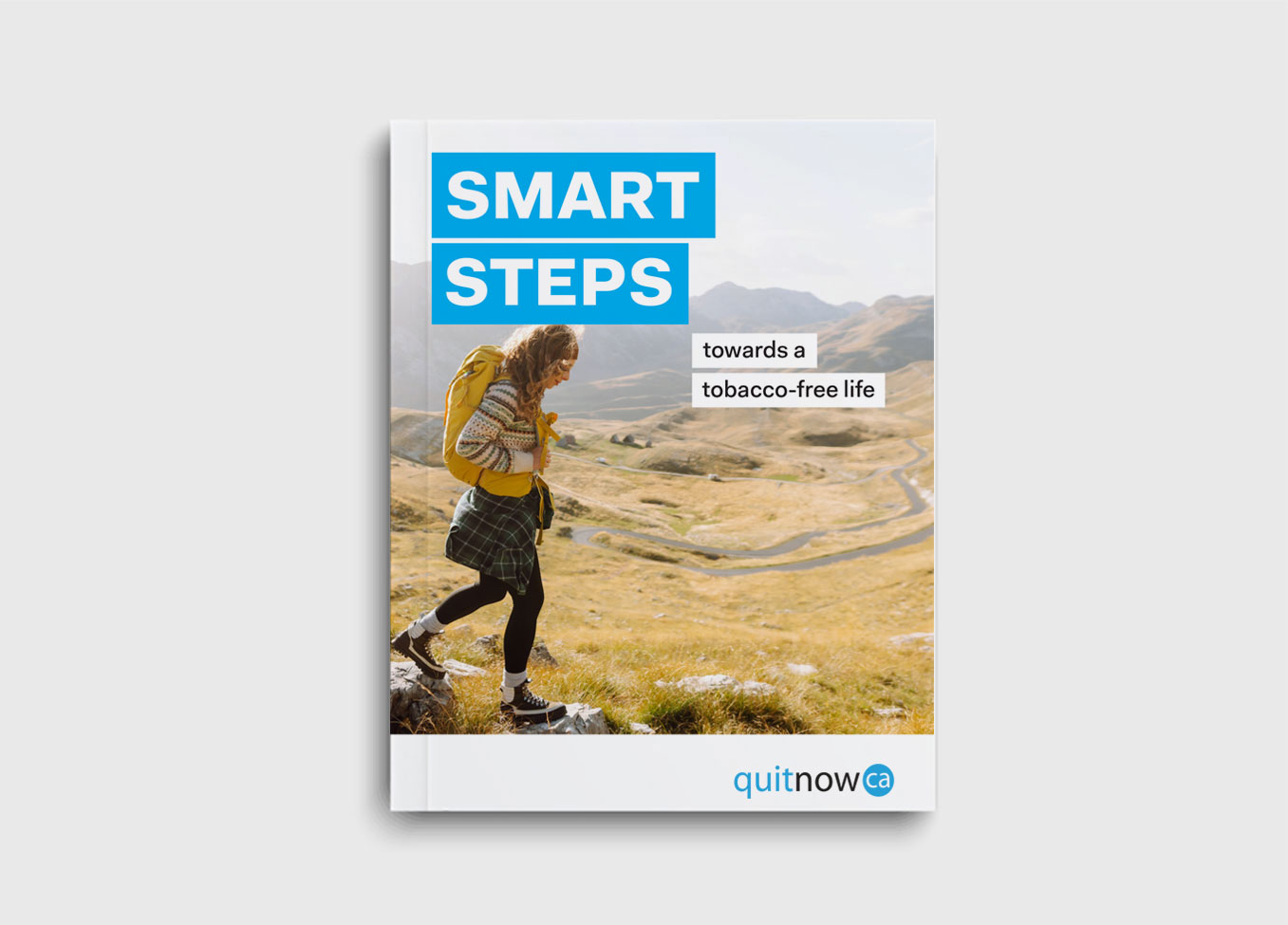

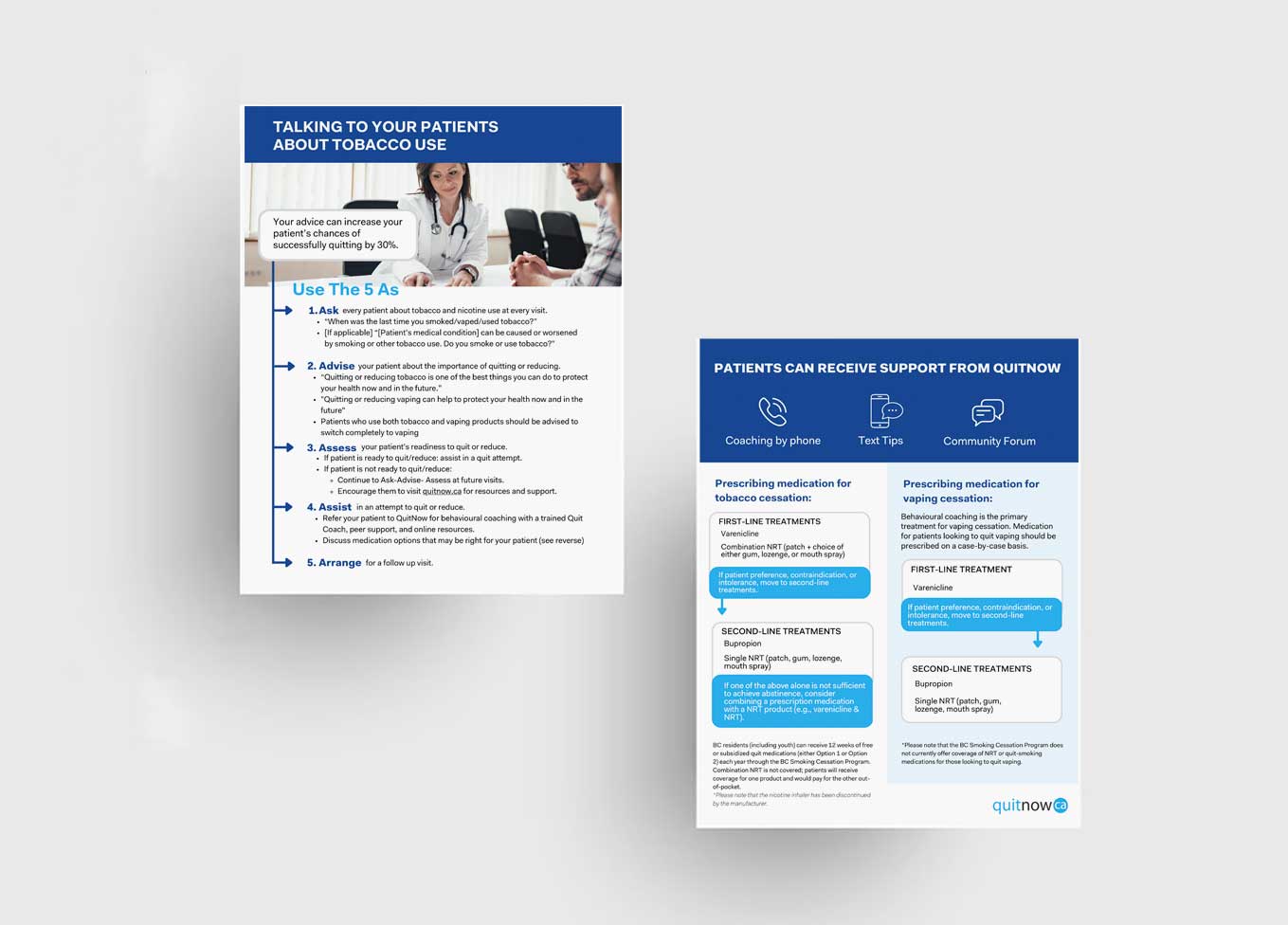
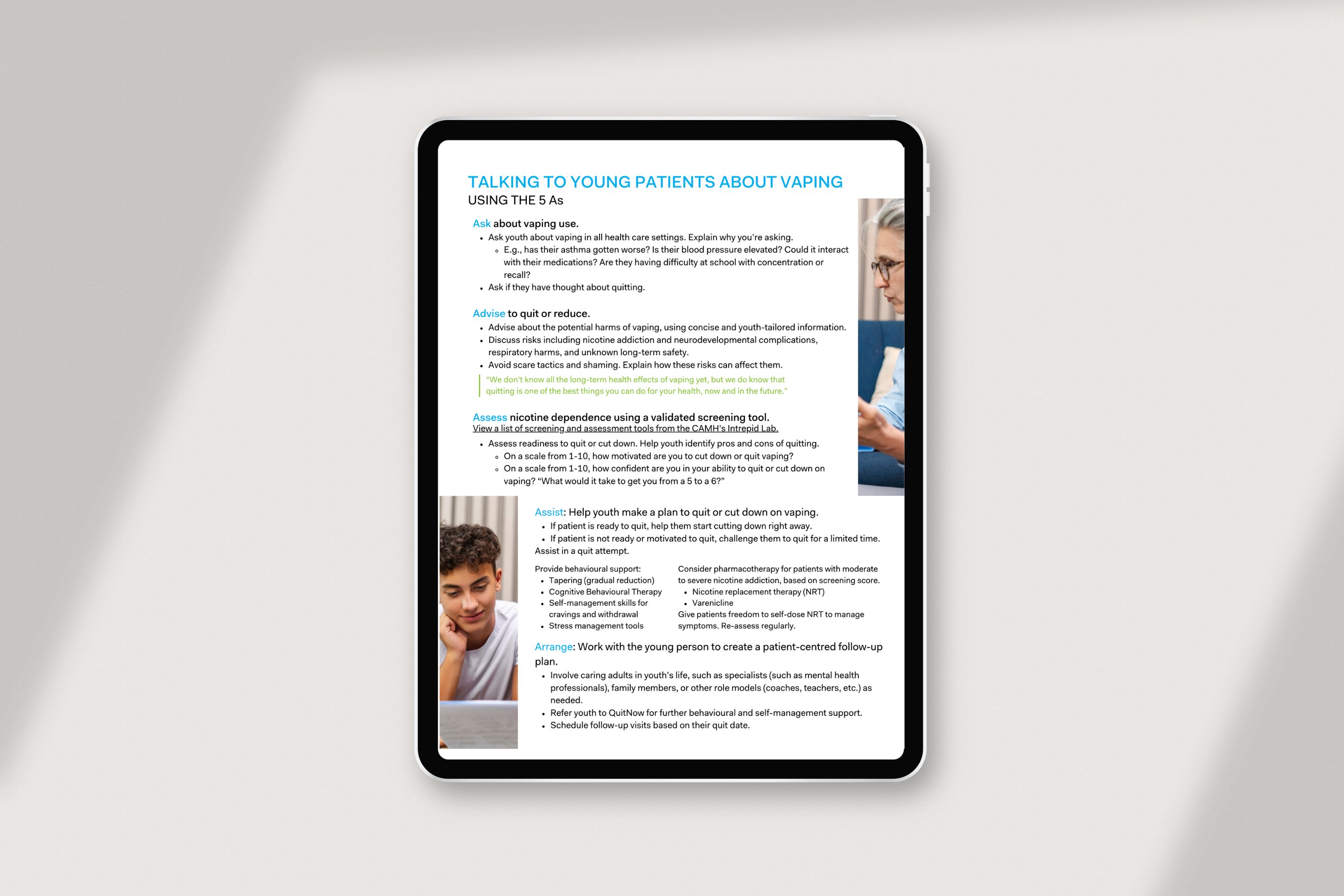
Talking to Young Patients About Vaping (download only)
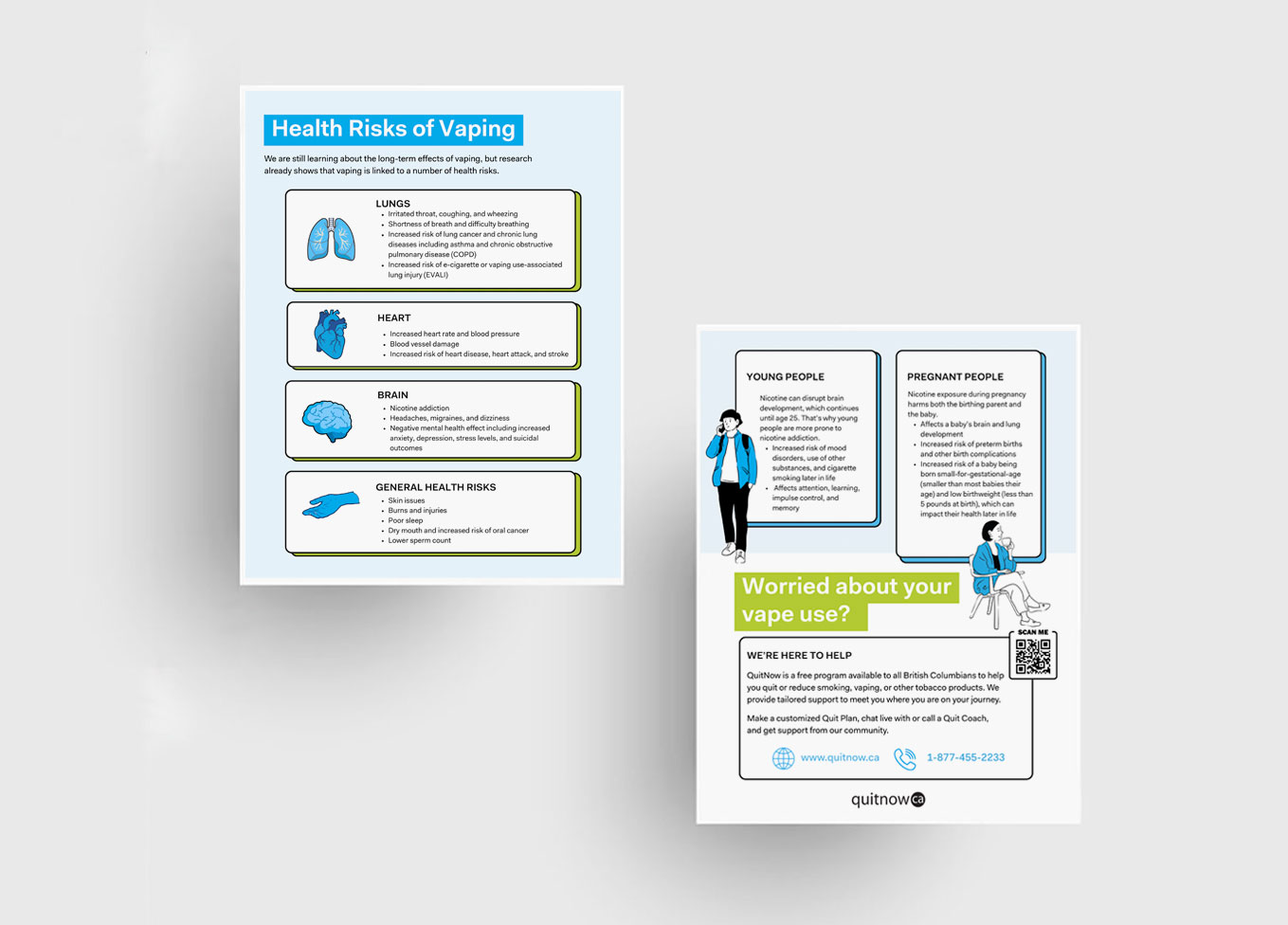
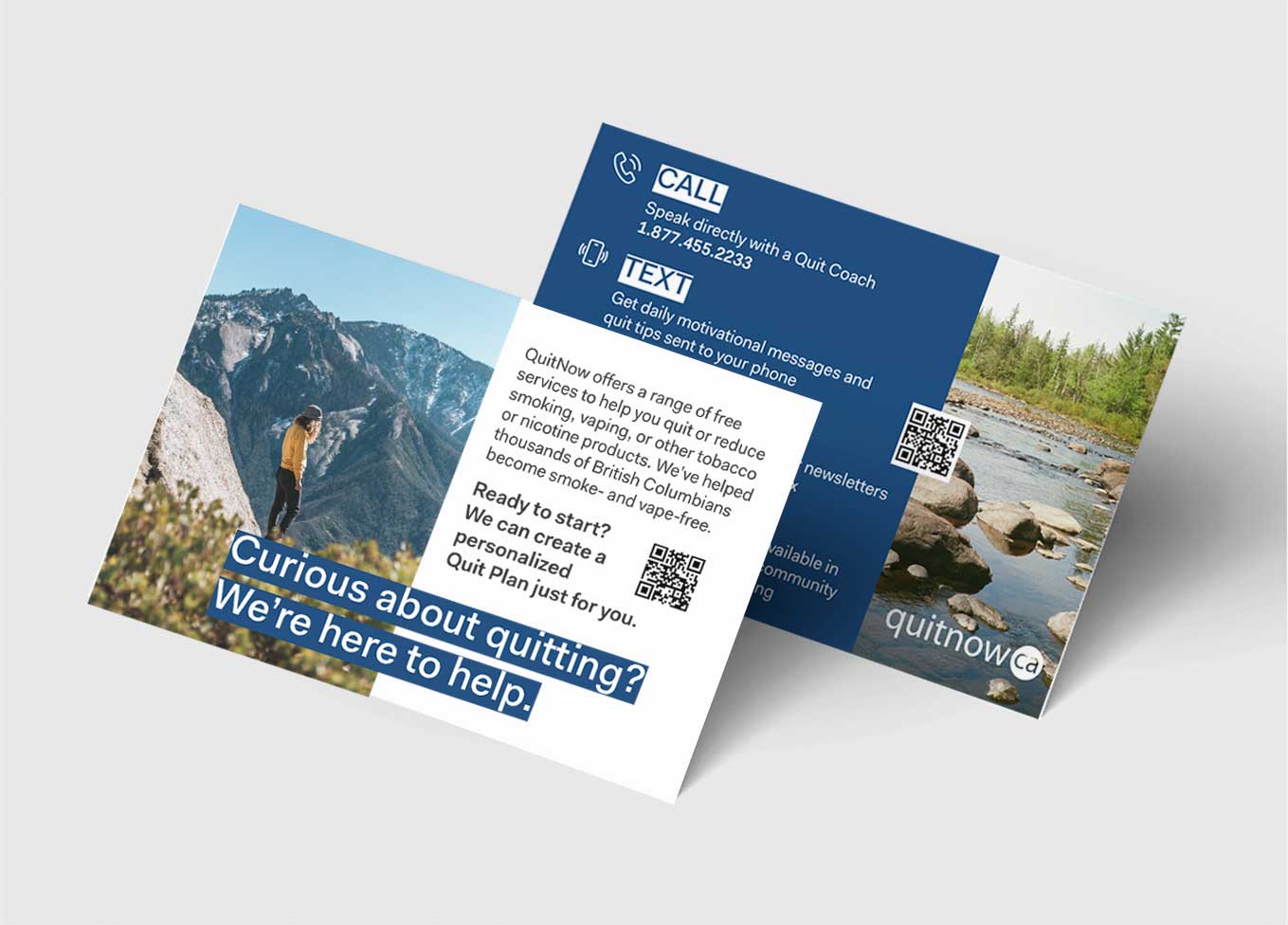
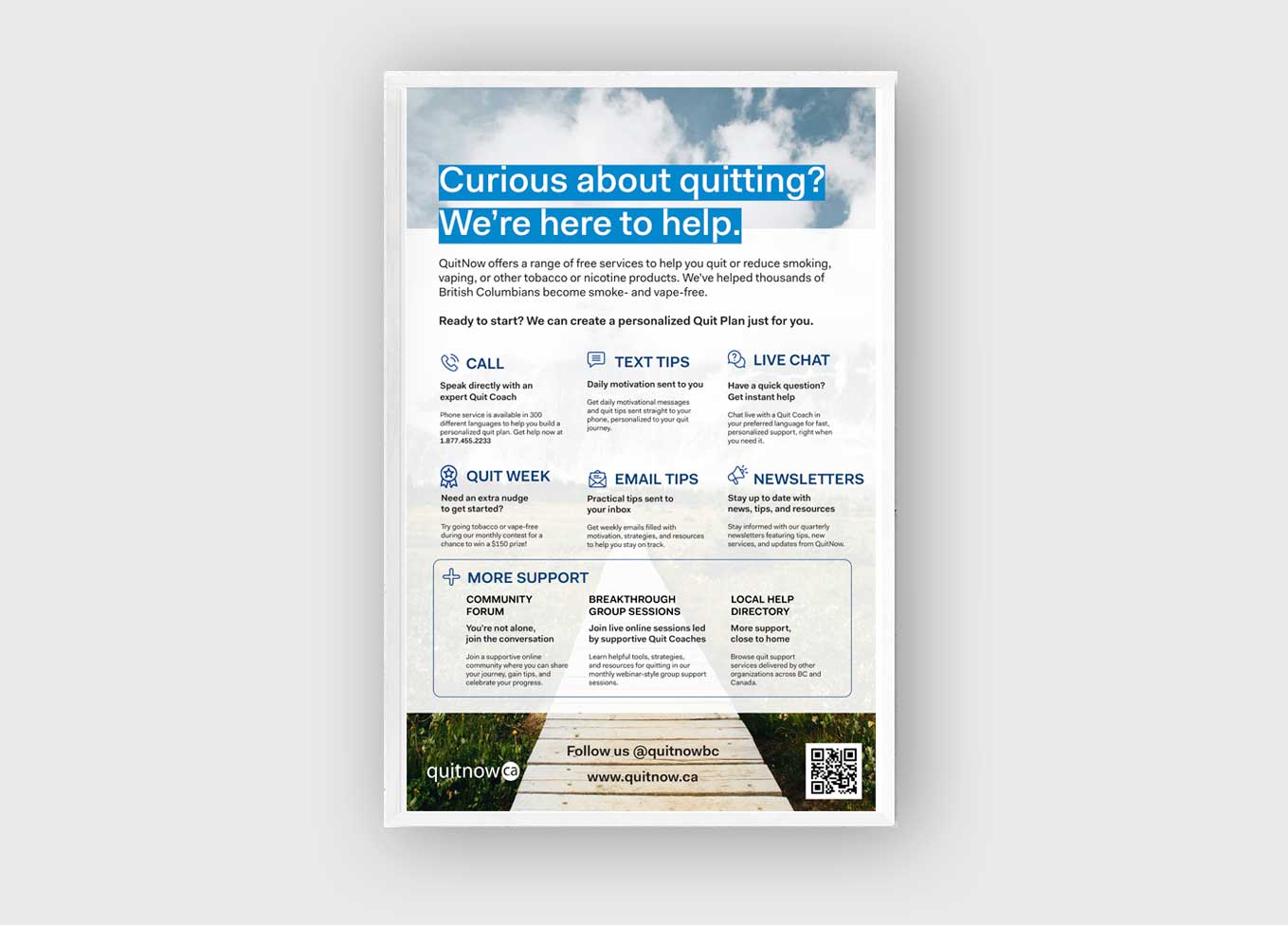
QuitNow Services (postcards, brochures, posters, and more)
Click here to order printed materials delivered straight to your pharmacy.
* Please note QuitNow's printed materials are available and intended only for the province of British Columbia, Canada.
By working together, pharmacists and QuitNow are strengthening tobacco and nicotine cessation across British Columbia, one conversation, one referral, and one quit attempt at a time.
- Government of British Columbia (2024). Tobacco Use Disorder (TUD). Accessed October 20, 2025 from https://www2.gov.bc.ca/gov/content/health/practitioner-professional-resources/bc-guidelines/tobacco-use-disorder
- Fraser Health Authority. (2025). Youth and vaping. Accessed October 20, 2025 from https://www.fraserhealth.ca/health-topics-a-to-z/children-and-youth/substance-use-in-children-and-youth/vaping-products