
Artificial intelligence is everywhere these days, and it’s coming to health-care practice near you. Multiple major pharmacy groups in Canada told The Tablet they have started testing their own pilot projects using artificial intelligence (AI), though none are ready to share details; and over in Nova Scotia, 46 community pharmacies are integrating AI “scribes” – think, automatic notetaking – to generate standardized patient summaries.
While those examples are out of province, here in B.C., there are local examples of individual community pharmacists who have taken it on their own to trial various AI tools. And even the University of British Columbia’s Faculty of Pharmaceutical Sciences is taking a crack at the new technology as a student-training aid.
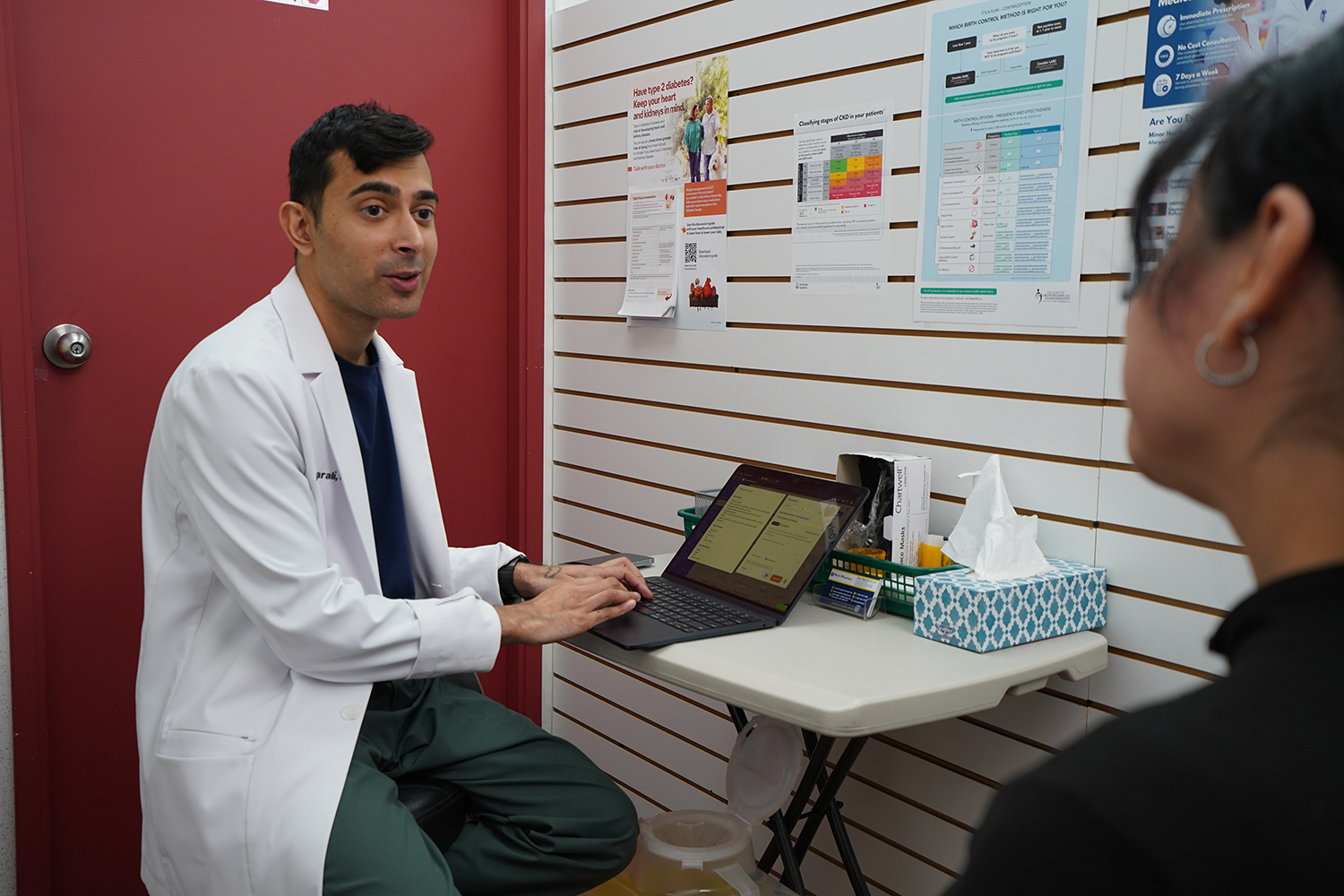
Aazil Nazarali, Empathia AI Scribe
Aazil Nazarali is the pharmacy manager at Naz’s Pharmacy Fraser in Vancouver. The tool he uses is called an “AI scribe”, an assistant that listens in during consultations with patients and subsequently generates notes to help with charting and documentation.
Initially, his interest began with using ChatGPT to help prepare templates for minor ailment consults and medication reviews, but soon, he was researching other companies in the AI space, specifically, seeking tools that prioritized accuracy and health-care settings. One company caught his eye, and he soon learned that a neighbouring physician was also interested in the same software. The two of them decided to set up a meeting.
“They are a Canadian company called Empathia and they were a small start-up. We sat down with them and started with a trial subscription, and I’ve been using it for about a year and a half. These days, I think all the clinicians next door are now using it, too,” Nazarali said.
The tool itself has an application on his phone that functions like a chatbot, plus a version for the computer that connects with his Google Chrome browser, which he uses for documenting patient consults. Nazarali doesn’t use the tool for everything. Typically, the AI scribe would be employed for recurring consultations, particularly uncomplex cases for minor ailments and medication reviews — and always with the patient’s prior consent.
“Prior to using this tool, if I do 10 medication reviews in a day, I’d probably spend 1.5 to two hours charting after the pharmacy is closed for the day. But now, not only am I able to see more patients in a day, but I’m also able to enjoy my time off in the evening,” Nazarali said.
So far, he continues to be the only pharmacist in his group who uses this tool. One of the barriers for adoption, he believes, is the requirement for each individual user to train their AI to their specific needs.
“Every clinician practices differently and it takes time to teach the AI. For me, this meant four to five hours in the evening for multiple weeks teaching the AI to create templates,” Nazarali said. “You also can’t rely on it fully. It’s an assistant, an assistant who may make mistakes that you will have to catch. And as a licensed individual, at the end of the day, you as the pharmacist are still the one making the decisions. But it helps. Rather than spending 20 minutes typing, I can spend a couple of minutes proofreading and checking instead, which saves a lot of my time.”
Empathia, the company behind Nazarali’s AI scribe tool, said it built the scribe tool with British Columbia’s clinical pharmacy services in mind, including minor ailment prescribing.
“Built for clinical pharmacists, Empathia delivers intelligent note-taking that simplifies documentation, supports regulatory compliance with the 21 minor ailment templates, and gives you back valuable time with your patients,” the company said in a statement.
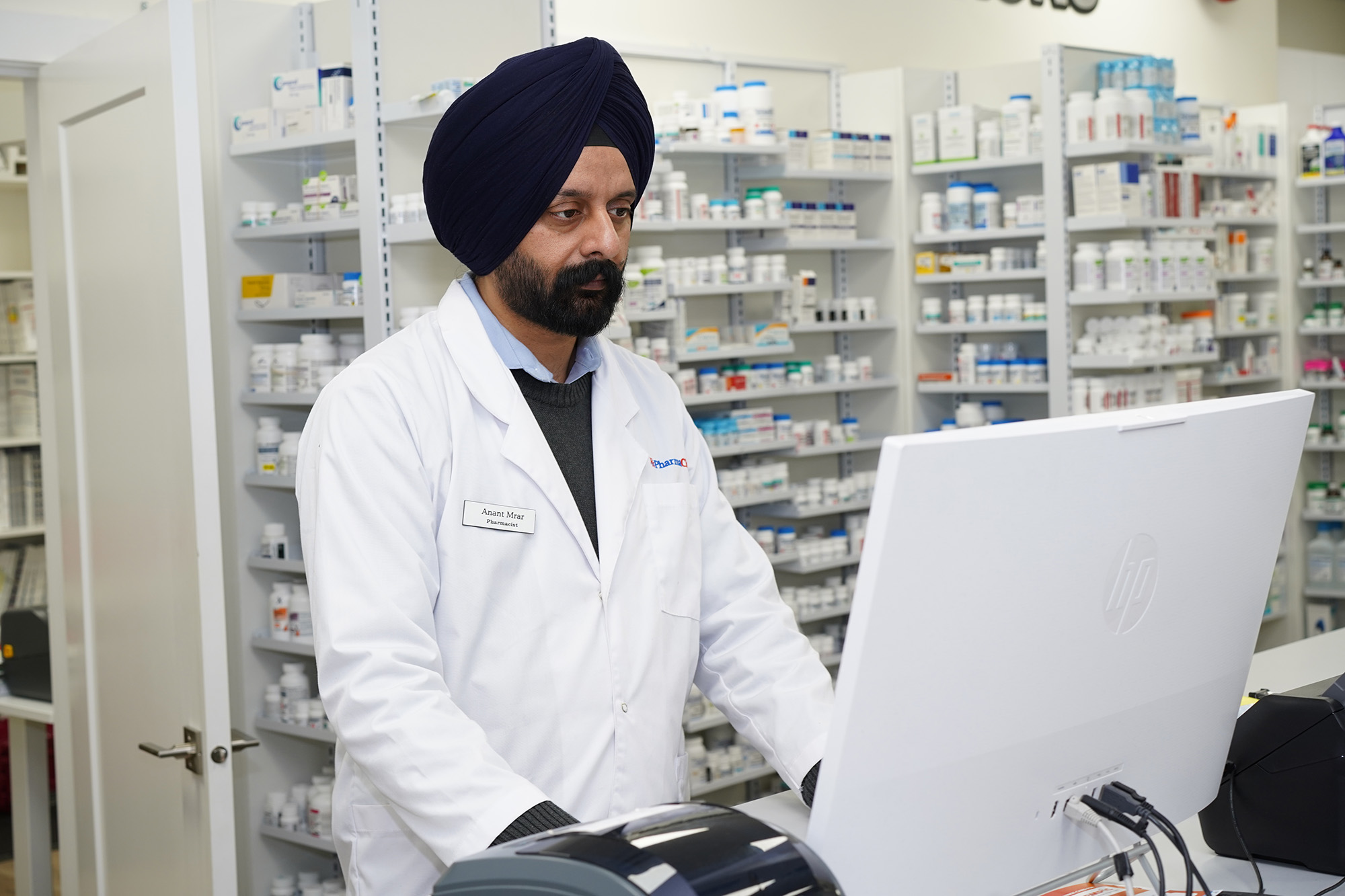
Anant Mrar, Applied Robotics / WinRxFax
Owner of four community pharmacies in the Lower Mainland, Anant Mrar’s practice may receive as many as 450 faxes per day, most of them prescriptions. The AI tool he employs is an optical character recognition technology that’s connected to his fax software, WinRxFax, supplied by a Langley, B.C.-based company. This technology automatically categorizes incoming faxes by reviewing the information, organizing it in a format usable by the pharmacist, and then creating a notification for manual verification. Mrar estimates the tool saves him approximately 3.5 minutes for each prescription he fills.
“Let’s say a prescription comes. I press the F4 key on my computer, and it will bring up all the data the doctor has written in the fax: the patient, personal health number; the medication, Amoxicillin, 500 milligrams, TID for seven days. It will select the available drug from the system, strength, quantity, days supply, and identify the doctor who has written it through the College of Physicians and Surgeons ID number. I verify everything, but 99 per cent of the time the data is correct,” Mrar said.
The software works with more than just prescriptions, too, and it also works to on physical paper prescriptions and patient intake forms for clinical services. He’s been using it for about three years, and says the accuracy of the system has increased over time.
“For example, a patient is coming in for a minor ailment consultation for acne. As per the medSask form, we always ask questions in our intake form, such as what are the symptoms, medication history and whether the patient is using OTC medications. The AI will then look at that information and make recommendations. Let’s say this patient has used doxycycline already for three months without improvement. The AI will suggest, as per this reference, this page, this should be the next line of treatment, and we would look at that, verify the information, and make a decision,” he said.
Mrar anticipates that more AI tools will soon be adopted. He’s been looking at introducing AI scribe tools for his pharmacies, while keeping an eye on what other pharmacy groups are testing.
“People might be reluctant to try new things, but more pharmacists are starting to use these tools. Anytime I show this to another pharmacist in my friend circle, they want to start using it and ask me many questions,” he said. “I recommended to the software company, give these AI tools as a trial to all your pharmacy clients for three months, and they will see the benefits.”

Fong Chan, Jamie Yuen, GenRx
A project of the University of British Columbia’s Faculty of Pharmaceutical Sciences, GENRx is a virtual patient simulation platform led by Fong Chan, co-assistant director of the E2P PharmD Program, and Jamie Yuen, assistant director of the UBC Pharmacists Clinic.
The idea was inspired by the emergence of AI large language models such as ChatGPT and the isolation of the COVID-19 pandemic, which limited opportunities for students to have face-to-face interaction, particularly for lessons involving interactions with standardized patients. Through an internal Faculty grant and a grant from the UBC Teaching and Learning Enhancement Fund, the pair were able to secure funding to develop the project with the UBC Cloud Innovation Centre.
“The gold standard is still going to be standardized patients,” Chan said. “That’s what we ideally would want to offer our students, but because opportunities with standardized patients can be limited, we wanted to supplement and complement those patient-actor learning experiences with AI.”
The GENRx software itself is based on Meta’s LLaMA language model, with patient case material built into the system that the AI would draw from. So far, the team has developed cases for diabetes, insomnia, osteoarthritis, pyelonephritis, depression, heart failure, and more. To date, the program is limited to text-based conversations, but the goal is to eventually include voice-to-voice communication.
Up until December 2025, testing was limited to a handful of students involved with the project. But since then, Chan and Yuen have rolled out a beta test to the entire Faculty of Pharmaceutical Sciences student body using the case for osteoarthritis management. Evaluation and analysis of the beta test is ongoing.
“Our goal is for the next academic year to have GENRx in our integrated activities, ideally for students in all four years of the E2P program, and the idea is also to invite any instructor in our pharmacy program to create their own cases and incorporate these into their own courses,” Yuen said.
For more information about GenRx, visit pharmsci.ubc.ca/genrx.
``